Press / Media kit for Orchard of Flavours / Pomar dos Sabores Botanical Garden
Can Europe grow the fruits of a warmer world?
In Portugal’s Algarve, a botanical garden is testing 500+ kinds of edible plants for a hotter, drier future.
This is an invitation to see, taste and question
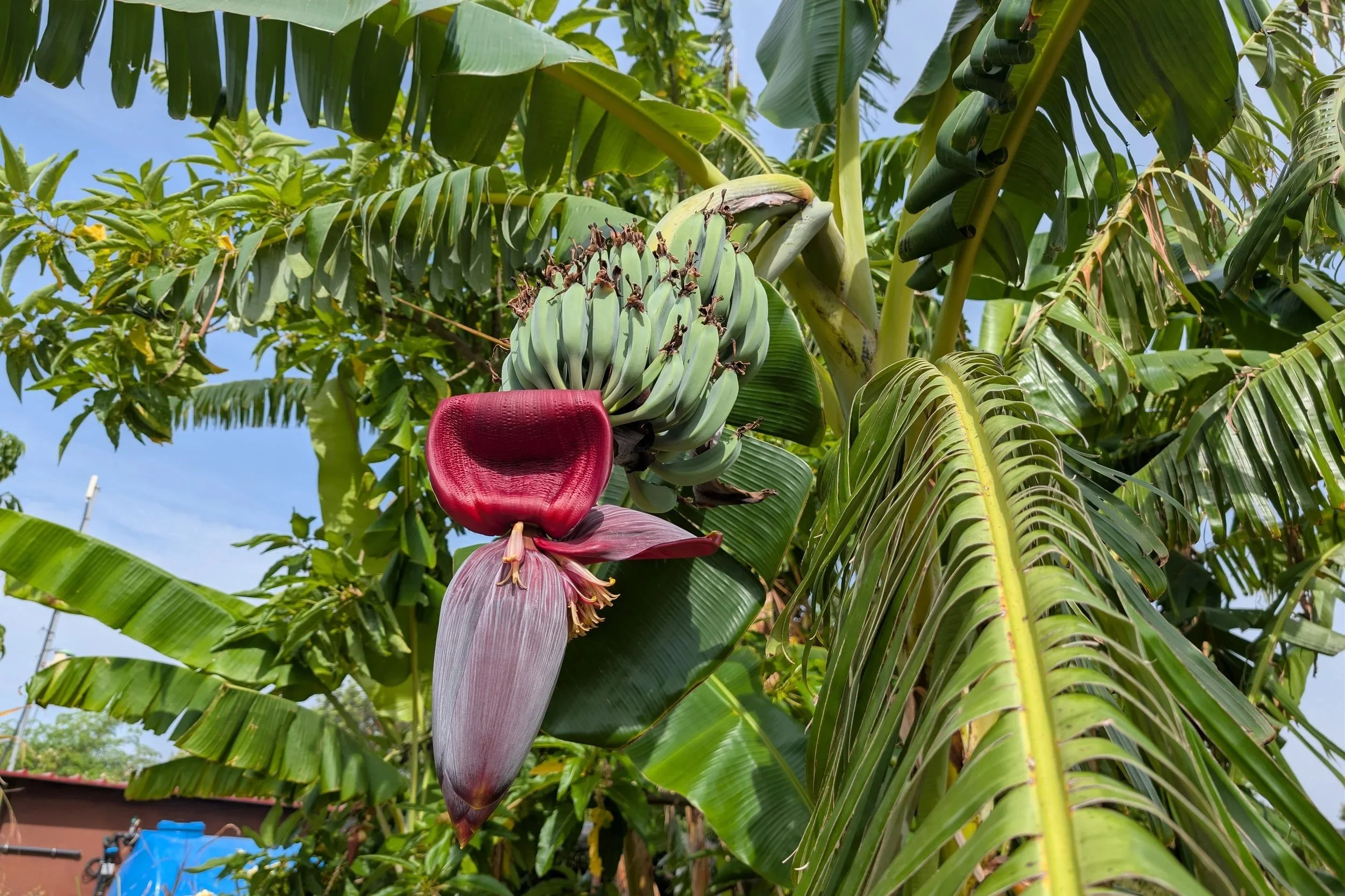
Blue Java banana (Musa acuminata × balbisiana 'Blue Java')
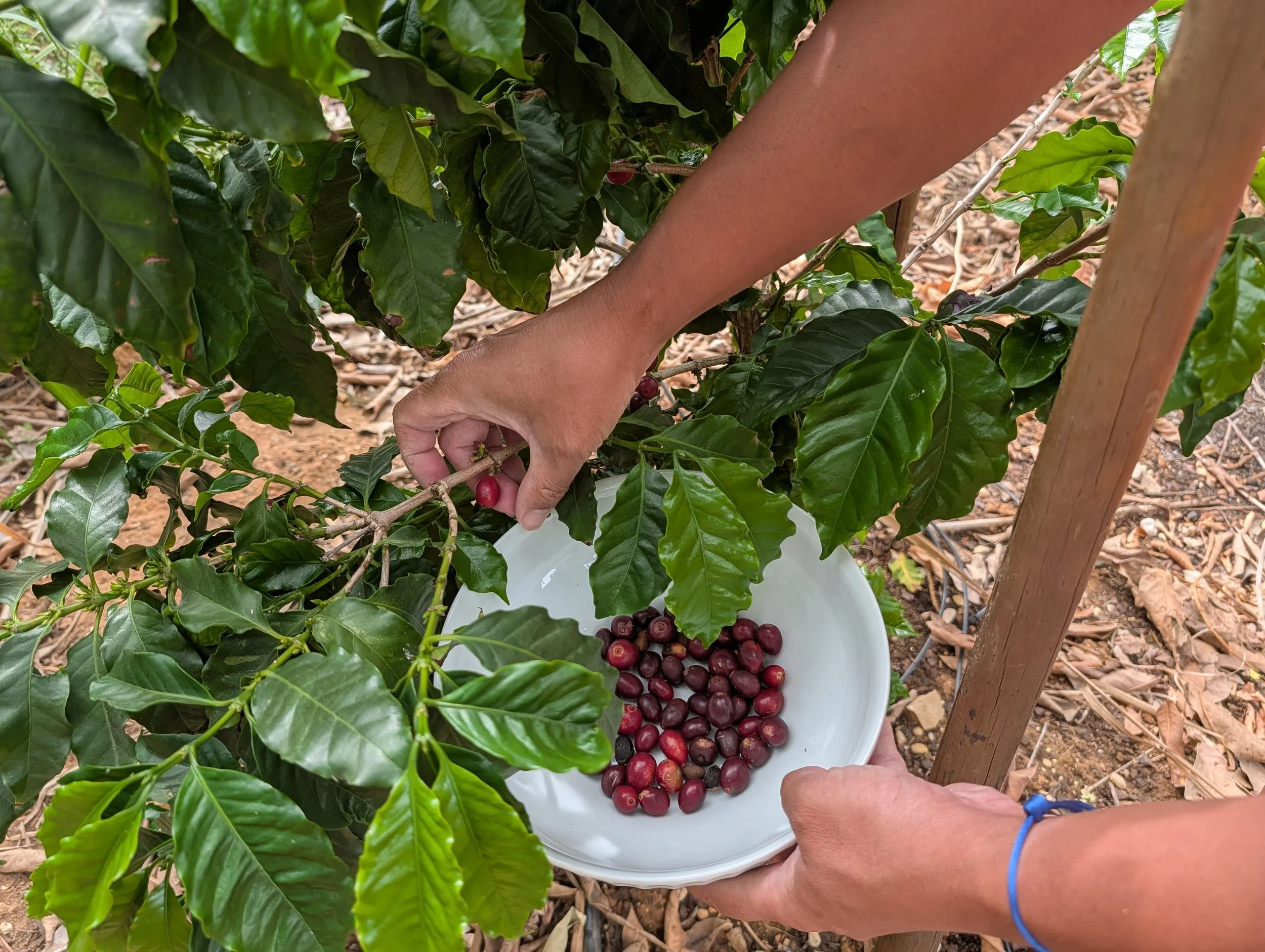
Harvesting our Arabica coffee (Coffea arabica)
Public plant database: www.orchardofflavours.com/our-living-collection
Instagram and Facebook: @orchardofflavours
High-resolution photographs for editorial use: photos.app.goo.gl/aCbrUZ6W3MDugaRw6
Our story in pictures, 2019 to today: www.orchardofflavours.com/timeline
What will Europeans grow and eat as the continent becomes warmer and drought becomes a growing challenge?
Near Tavira in southern Portugal, the answer may already be taking root.
In the Orchard of Flavours (Pomar dos Sabores) mangoes grow beside longans, mulberries, jujubes, ‘Blue Java’ bananas, ice-cream beans, peanut butter fruit and many other plants from subtropical and Mediterranean climates.
Almost every tree in the garden has travelled the world to ripen here — the mango from the foothills of the Himalayas, the ice-cream bean from the Amazon. And not one of them is wild: every food tree we eat was shaped by human hands over thousands of years.
The Orchard of Flavours documents what happens when unfamiliar food plants encounter Mediterranean conditions: hot and dry summers, intense sunlight, alkaline soil, wind, limited water and occasional winter cold. It looks for answers among 500+ kinds of perennial edible plants.
“I wanted to turn climate anxiety into practical action. We cannot control every change that is coming, but we can explore possibilities, share what we learn and help people make better-informed choices.”
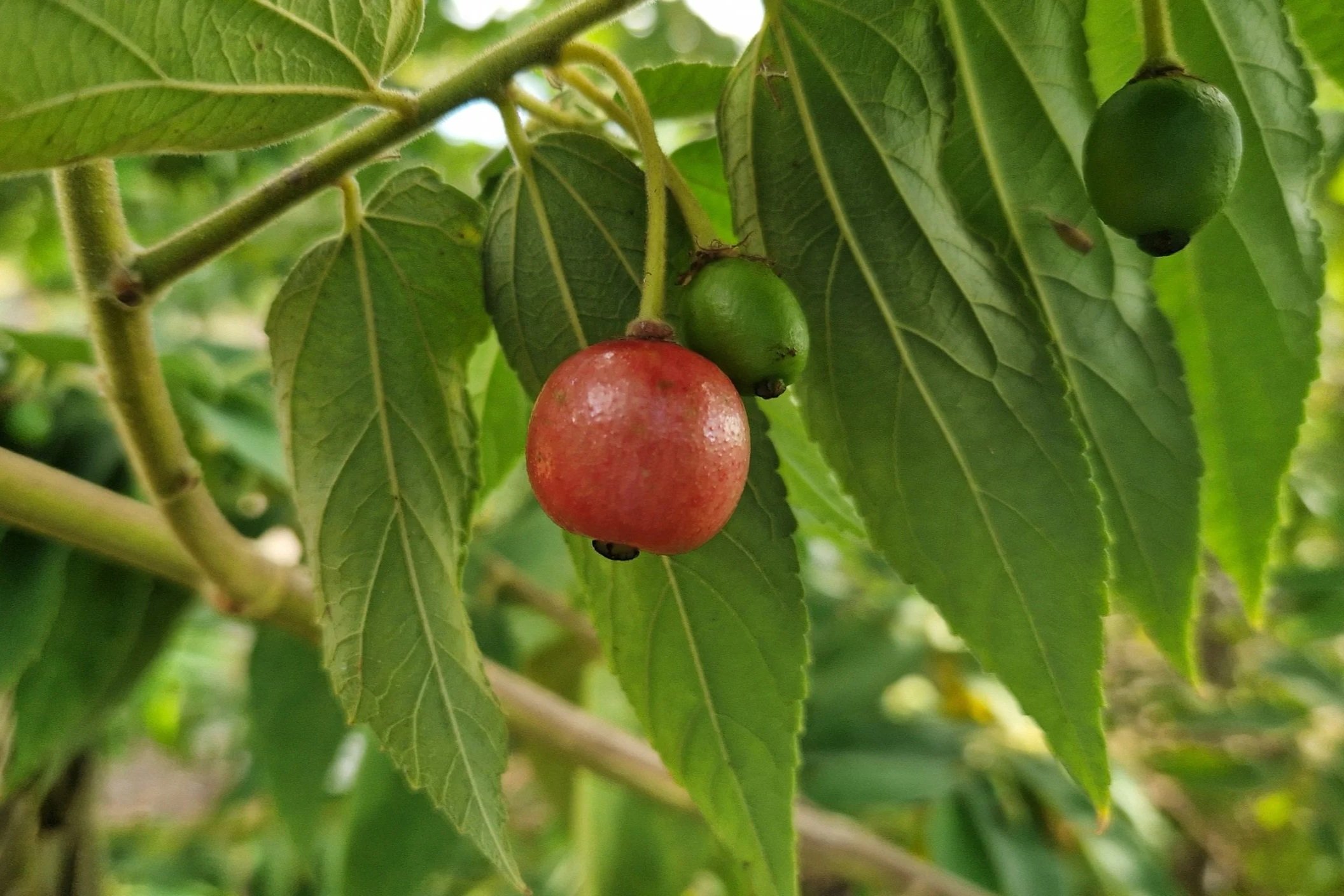
Cotton candy berry (Muntingia calabura)
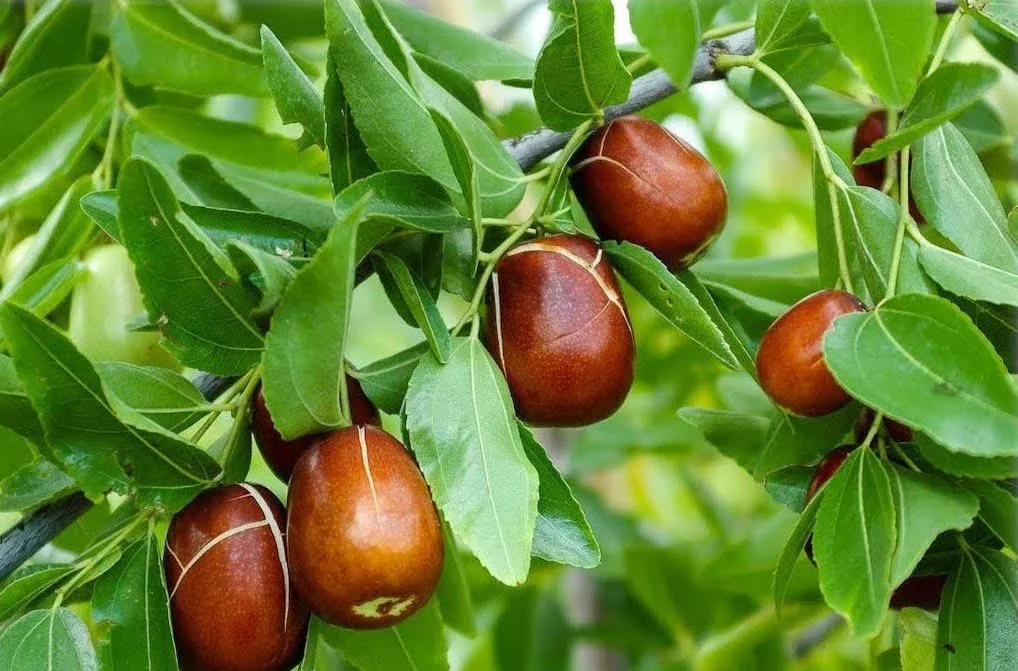
The jujube (Ziziphus jujuba)
Plants already producing at the garden
Several plants have now fruited for consecutive years without winter protection. These observations show that they can live and produce at this coastal Algarve site under the garden’s conditions.
They include the cotton candy tree (Muntingia calabura), peanut butter fruit (Bunchosia glandulifera), jujube (Ziziphus jujuba), ice-cream bean (Inga edulis), several guavas (Psidium species), argan (Argania spinosa) and several cherry-like Eugenia species.
Green sapote (Pouteria viridis) and jambolan (Syzygium cumini) both first fruited in their third year after planting at Orchard of Flavours.
Several species and varieties of mulberry are producing well, including the Himalayan long mulberry (Morus macroura). Banana cultivars produced at the garden include ‘Blue Java’, ‘Dajiao’ and ‘Chini Champa’. Edible-leaf plants such as cranberry hibiscus (Hibiscus acetosella), curry tree (Murraya koenigii) and moringa (Moringa oleifera) have also established reliably in the garden.
By publishing these observations, Orchard of Flavours is helping to build a publicly accessible record of how less familiar edible plants perform under Portuguese conditions.
Documenting successes — and failures
Not every tree survives — and that information matters too.
The garden’s “Plant Cemetery” records plants that have died and, where possible, why they failed, from frost damage to unsuitable or waterlogged soils.
The lessons are shared rather than hidden. Orchard of Flavours maintains an openly accessible plant database documenting botanical names, cultivars, origins, harvest periods and practical observations from the garden.
For growers and gardeners facing changing conditions elsewhere, knowing what fails can be as useful as knowing what succeeds.
“We are not looking only at whether a tree survives. We observe how it establishes, how much water it needs, how it responds to our soil and climate, and whether it can eventually produce useful food.”
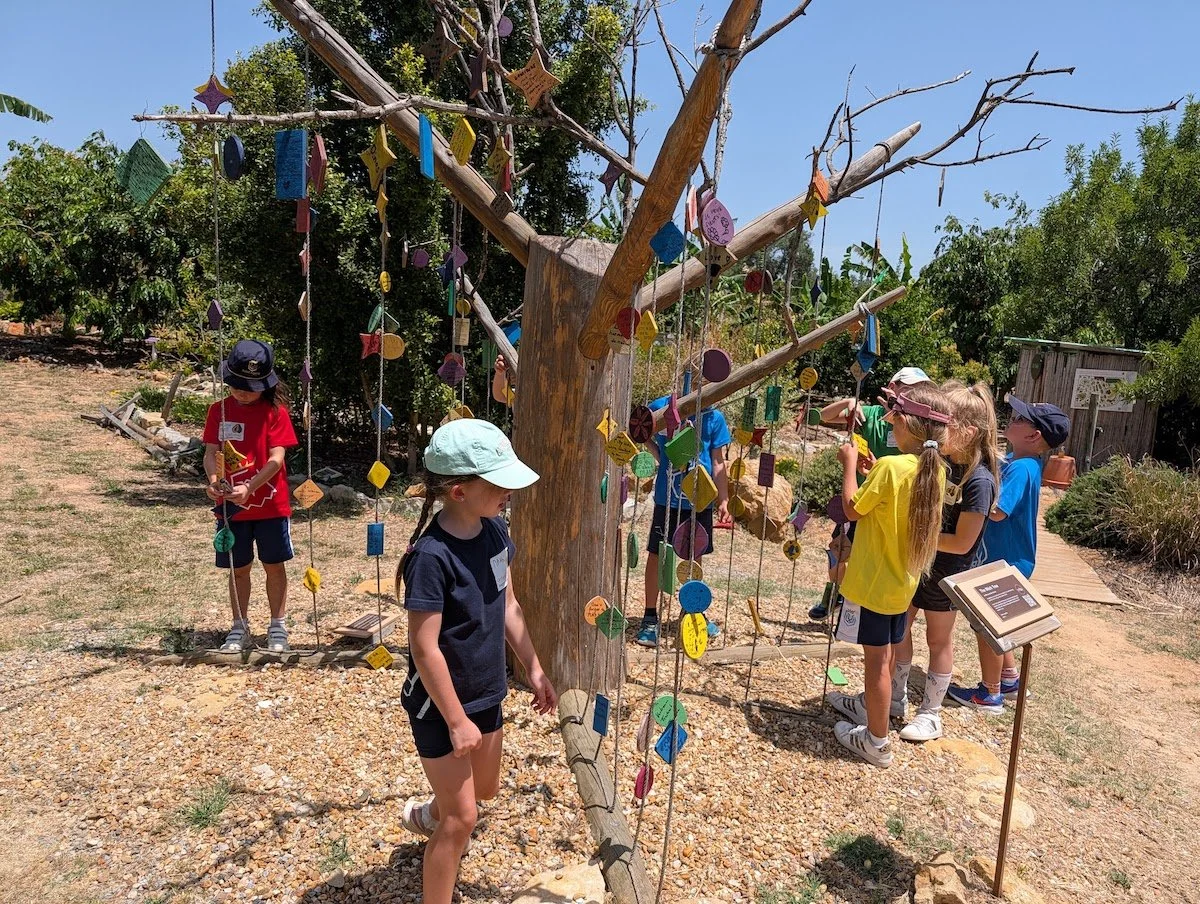
The Wish Tree - An artwork donated by Portuguese artist Marco de São Vicente
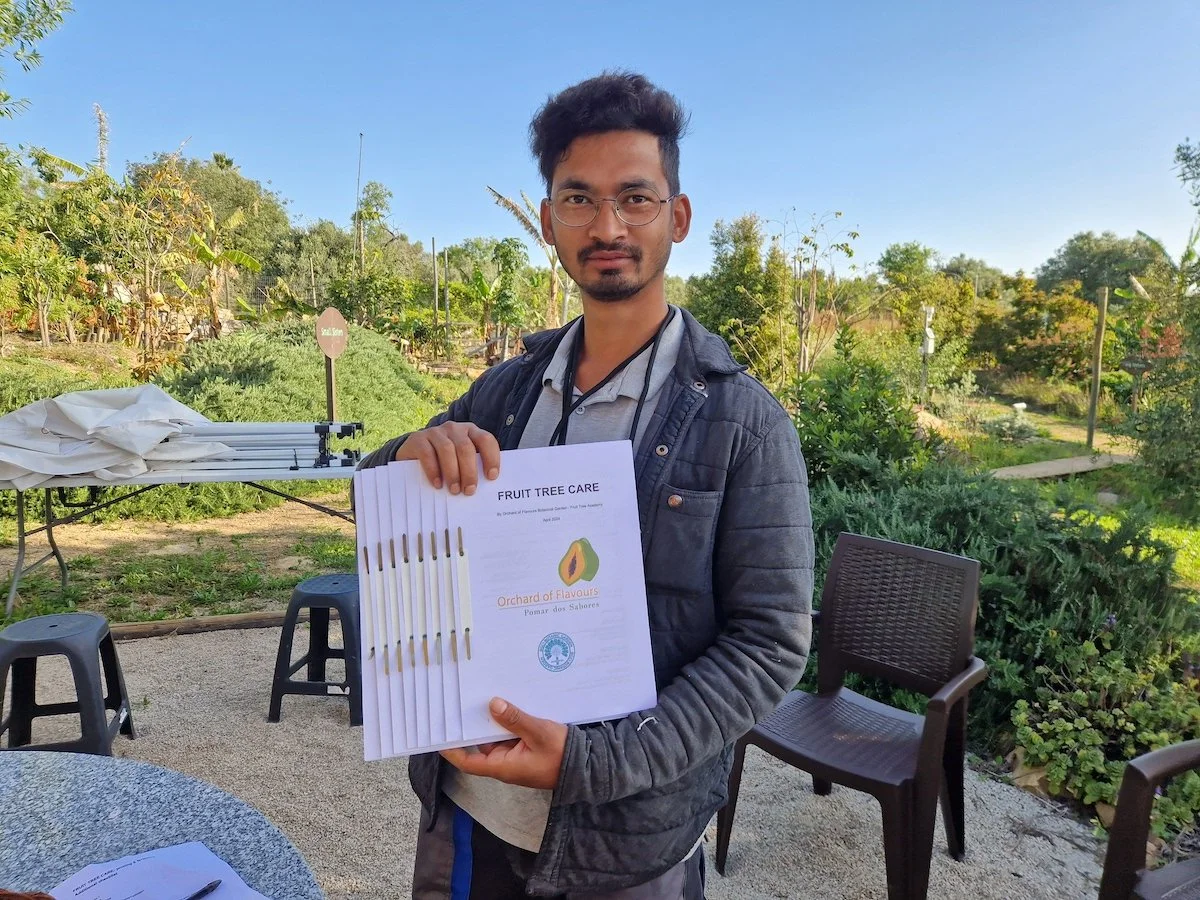
Milan Nepali, our garden steward, preparing for our Food Tree Care Workshop
A botanical project open to the community
Founded in January 2019, Orchard of Flavours has held BGCI Botanic Garden Accreditation since November 2022.
The 1.8 hectare garden shares its experience through its public plant database, free online information, consultancies, weekly volunteer mornings and the Food Tree Academy.
Over four years, the Academy has welcomed approximately 200 participants, including Portuguese landowners, gardeners and people developing orchards and regenerative projects.
The best time to visit
At the Orchard of Flavours Botanical Garden, there is always something ripening, but September and October bring some of the richest, most varied harvests of the year. Depending on the day and how the fruit is ripening, you may find 'Blue Java' bananas, ice-cream beans, peanut butter fruits, mangoes, longans, jujubes, feijoas, pomelos, tamarillos, passion fruits, pomegranates, several guavas, and more than ten edible leaves and flowers — all growing side by side.
Journalists are welcome to visit by appointment, all year round.
Come taste what the future might hold.
To arrange a visit: Miguel Cotton · miguel@orchardofflavours.com · WhatsApp / Phone: +351 926 780 724
About Orchard of Flavours — Pomar dos Sabores
Orchard of Flavours — Pomar dos Sabores is a non-profit edible botanical garden in Luz de Tavira, Algarve, Portugal. Founded in 2019, it combines botanical conservation, agroecological experimentation, education and open knowledge-sharing. It has been accredited by Botanic Gardens Conservation International (BGCI) since November 2022.
Press visits and interviews
Potential interview, photography and filming topics include: climate adaptation and European fruit production; fruit tasting; subtropical fruit growing in Europe; drought-resilient orchards (the Dry Orchard Experiment); mango cultivation in Portugal; young-tree protection and food-forest design; and rare or overlooked edible plants.
Lucas Oliveira
Portuguese-language spokesperson
Agronomic Engineer, University of Coimbra
WhatsApp / Phone: +351 969 175 712