
10 Edible Leaves and Flowers that Grow in Hot, Dry Climates
In August, every lettuce in the Algarve has given up. But walk through the Orchard and lunch is still growing — on trees, shrubs and flowers.
At least ten trees and plants with edible leaves or flowers grow well in hot, dry climates like the Algarve: moringa, daylily, saltbush and cranberry hibiscus, just to name a few. Most of them stay green through the driest summer months, when ordinary salad greens have stopped growing.
Here is a selection of our edible leaves and flowers, served with fork and knife.
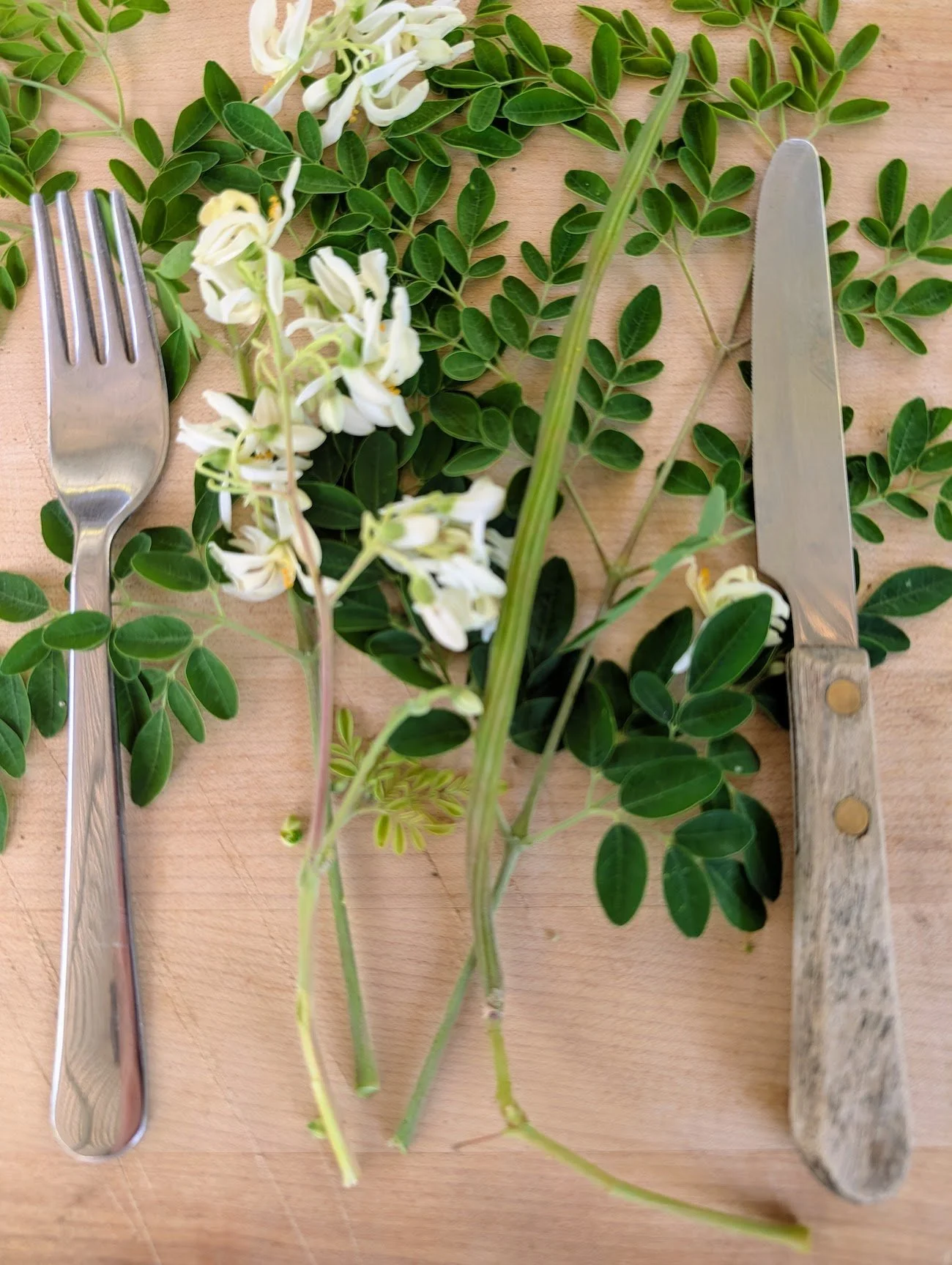
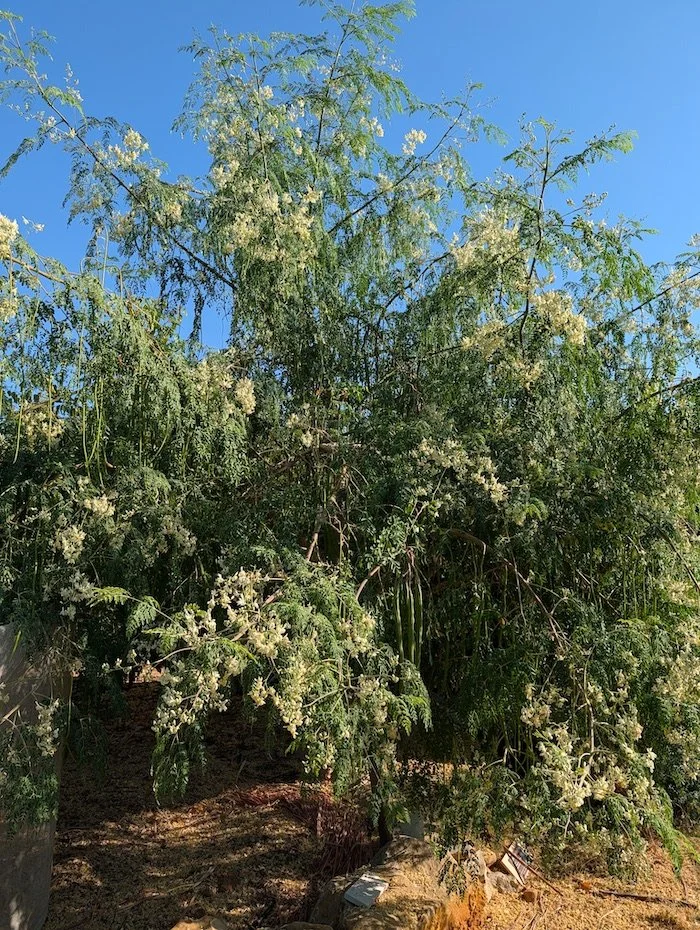
1. Moringa (Moringa oleifera)
Leaves with a gentle peppery bite, like rocket. Eat them fresh in salads, or cook them like spinach. The flowers are edible too.
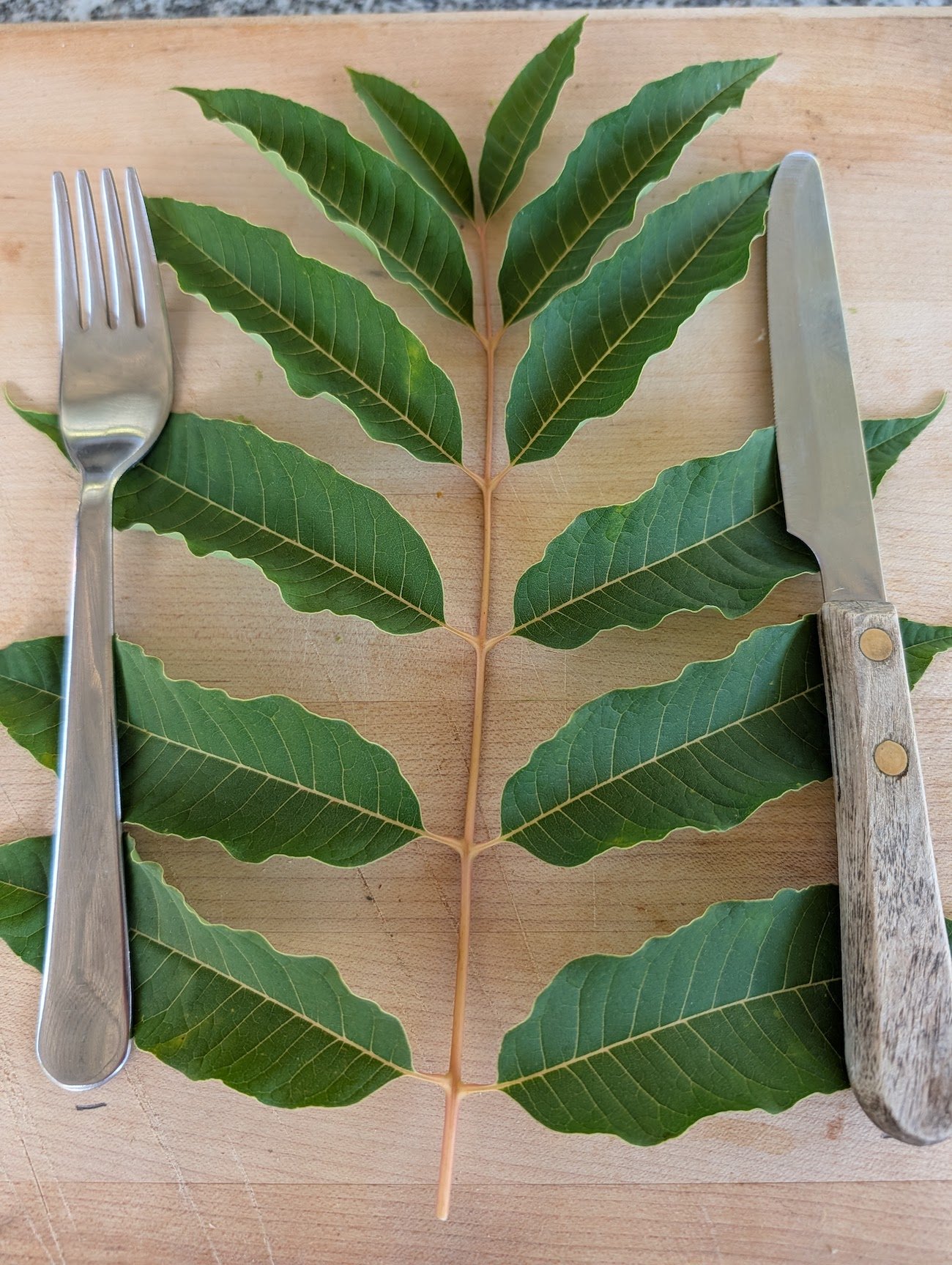
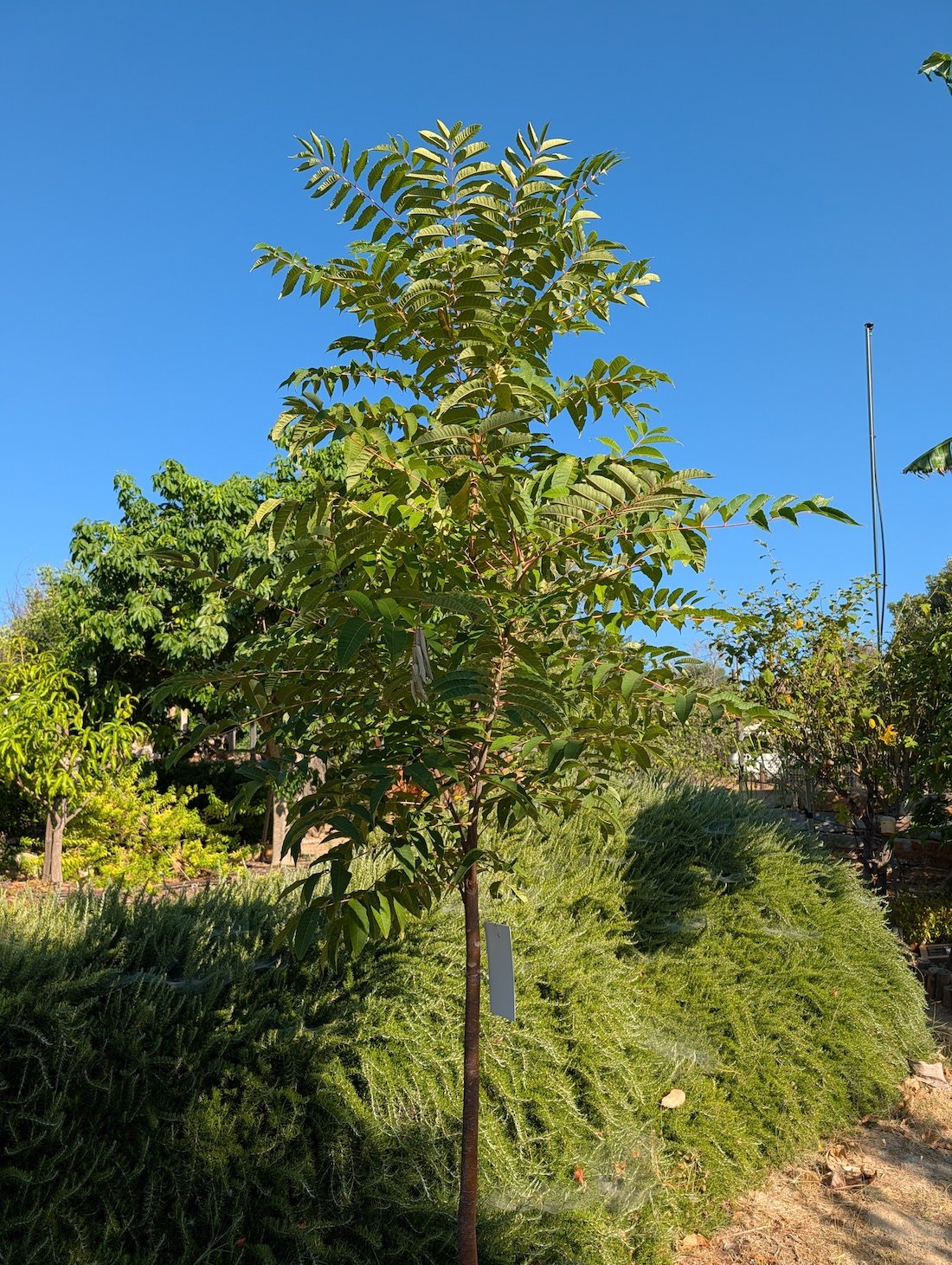
2. Chinese toon (Toona sinensis)
A tree whose young leaves taste of onion and garlic. In China, toon leaves scrambled with eggs is a beloved spring classic.
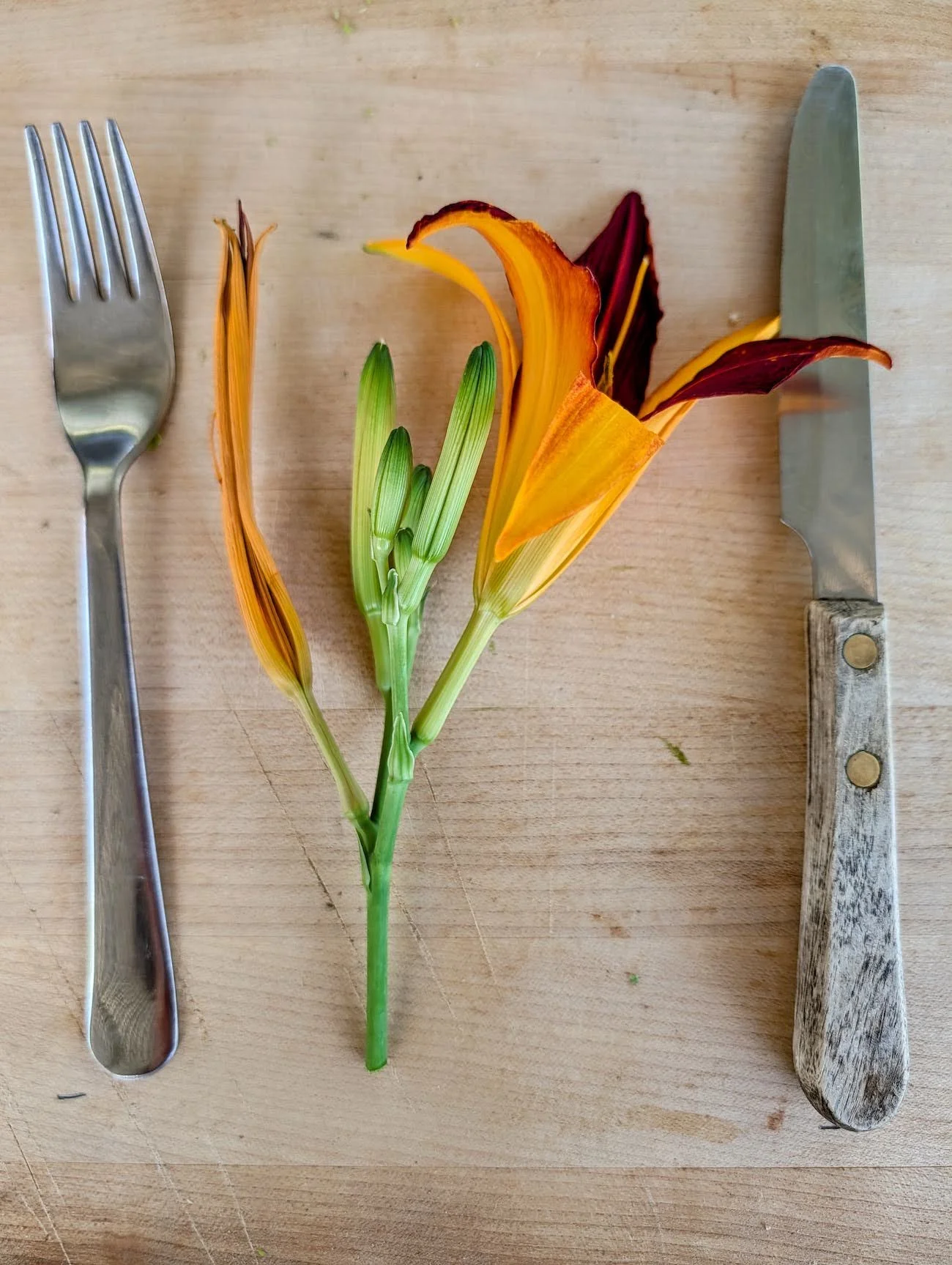
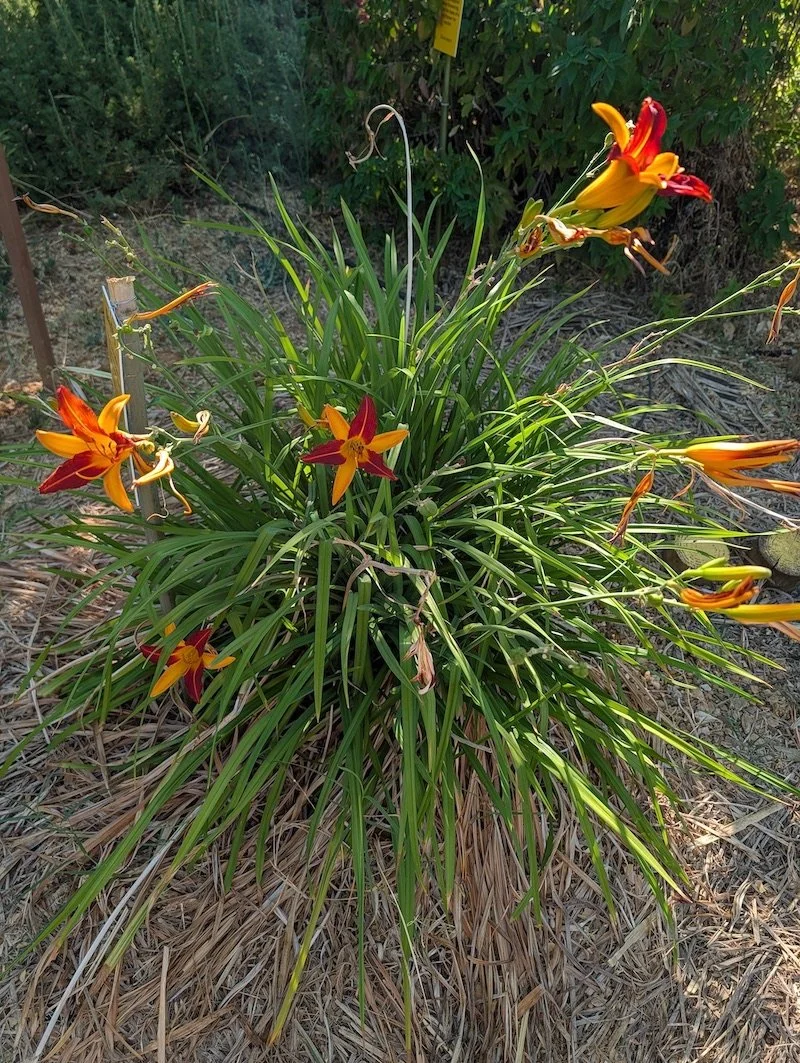
3. Daylily (Hemerocallis)
Crunchy, sweet petals. Scatter them over a salad, or cook the flower buds like green beans — Chinese cuisine has done it for centuries.
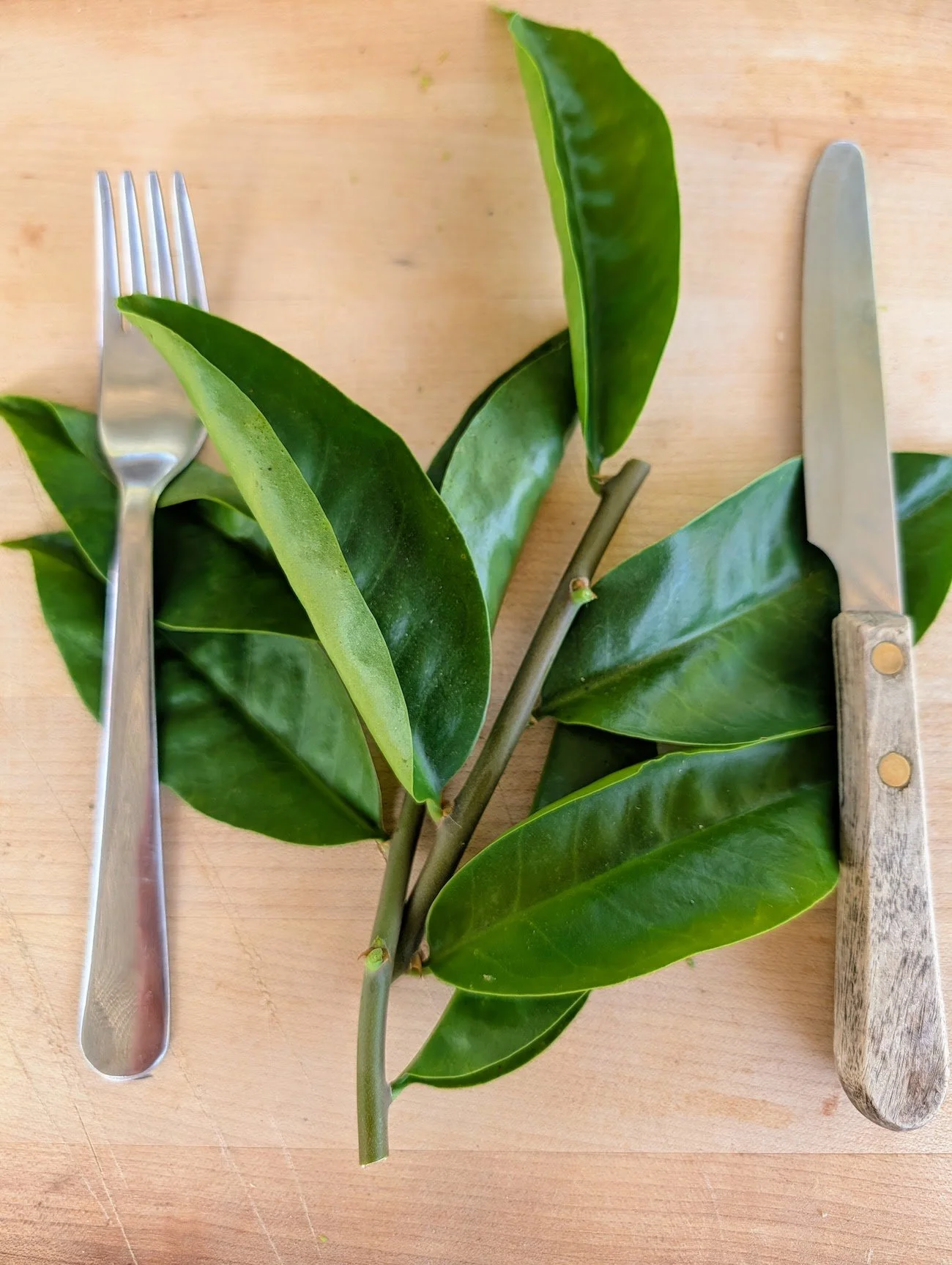
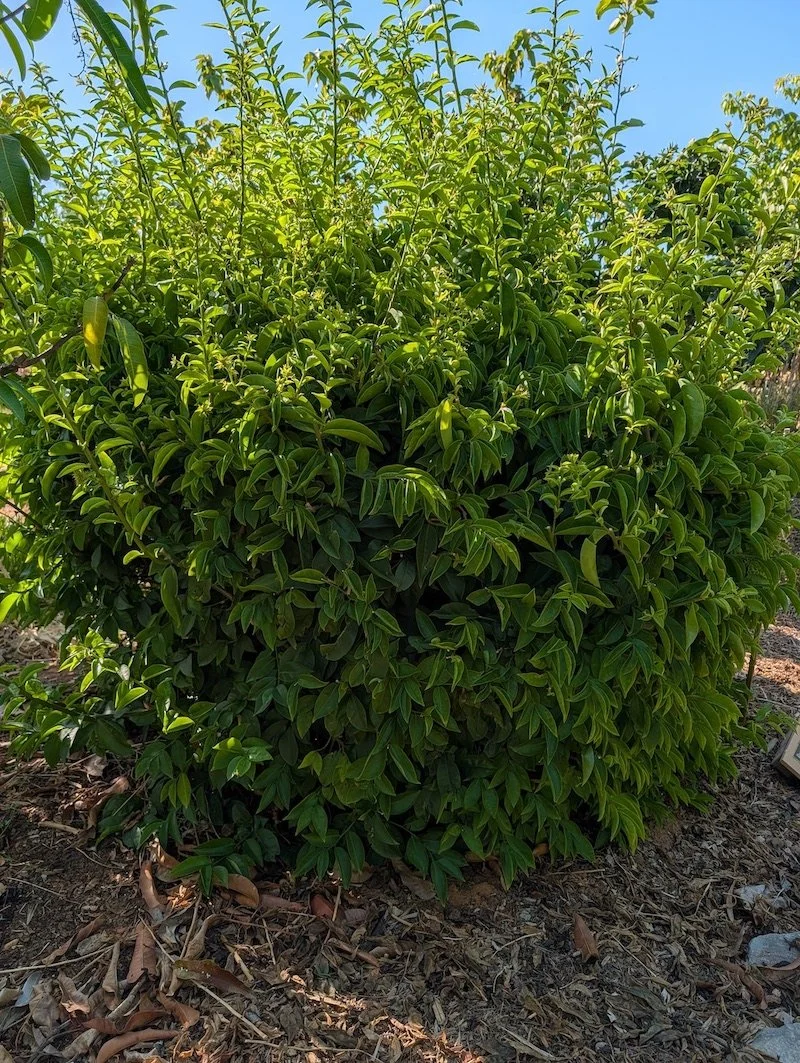
4. Carne de pobre — “meat for the poor” (Pereskia aculeata)
A cactus with real leaves — and you can eat them. Mild and tender, they melt into soups and stews. In Brazil, they are a kitchen staple.
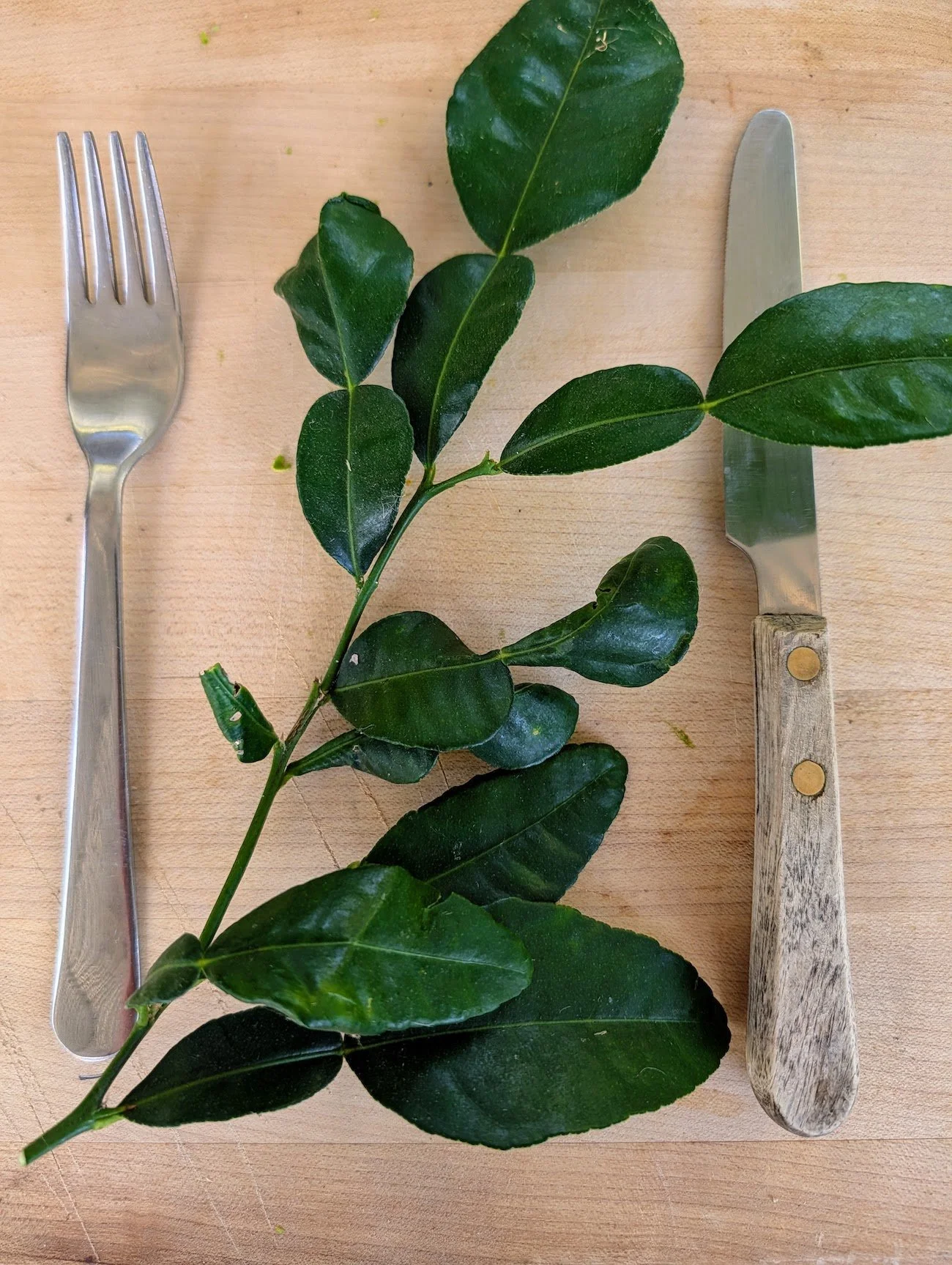
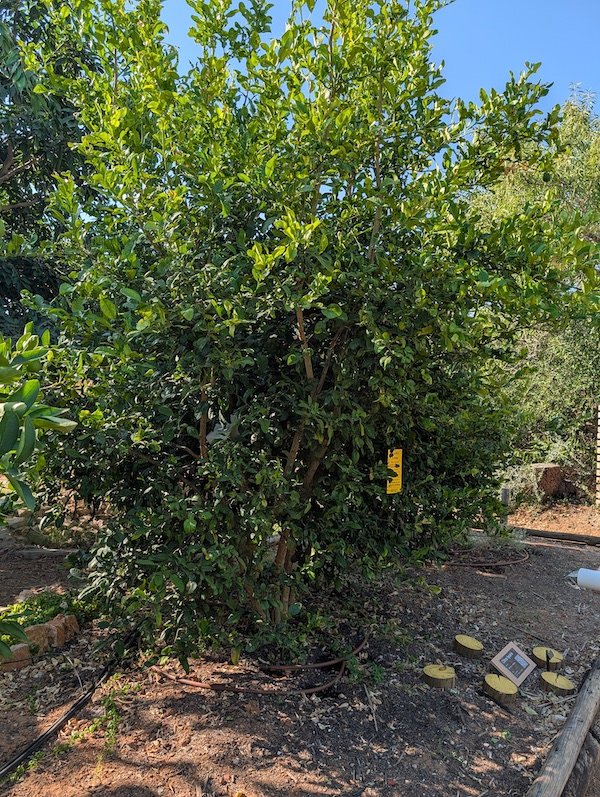
5. Kaffir lime (Citrus hystrix)
The most perfumed leaf in the citrus family. Tear one into a Thai curry or soup and the whole dish changes.
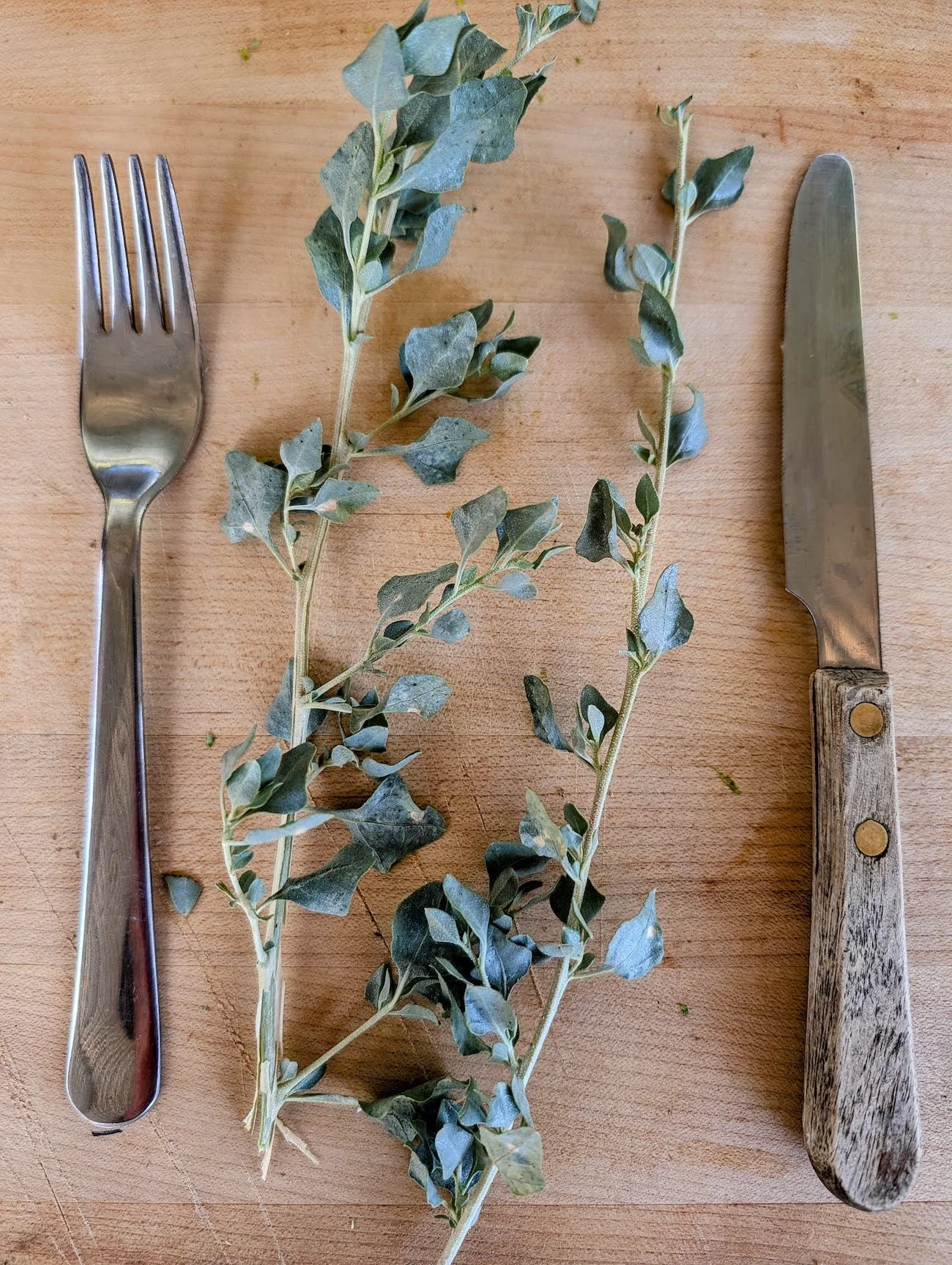
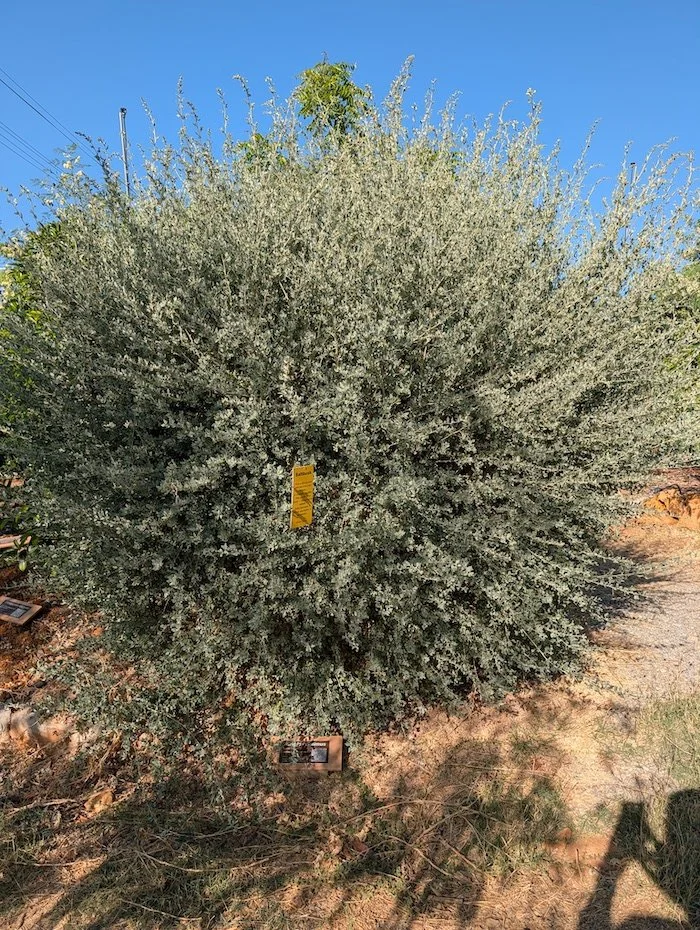
6. Saltbush (Atriplex halimus)
Leaves that come pre-salted by the plant itself. Fry them crisp or toss them in a salad — no salt cellar needed. And it grows on almost no water.
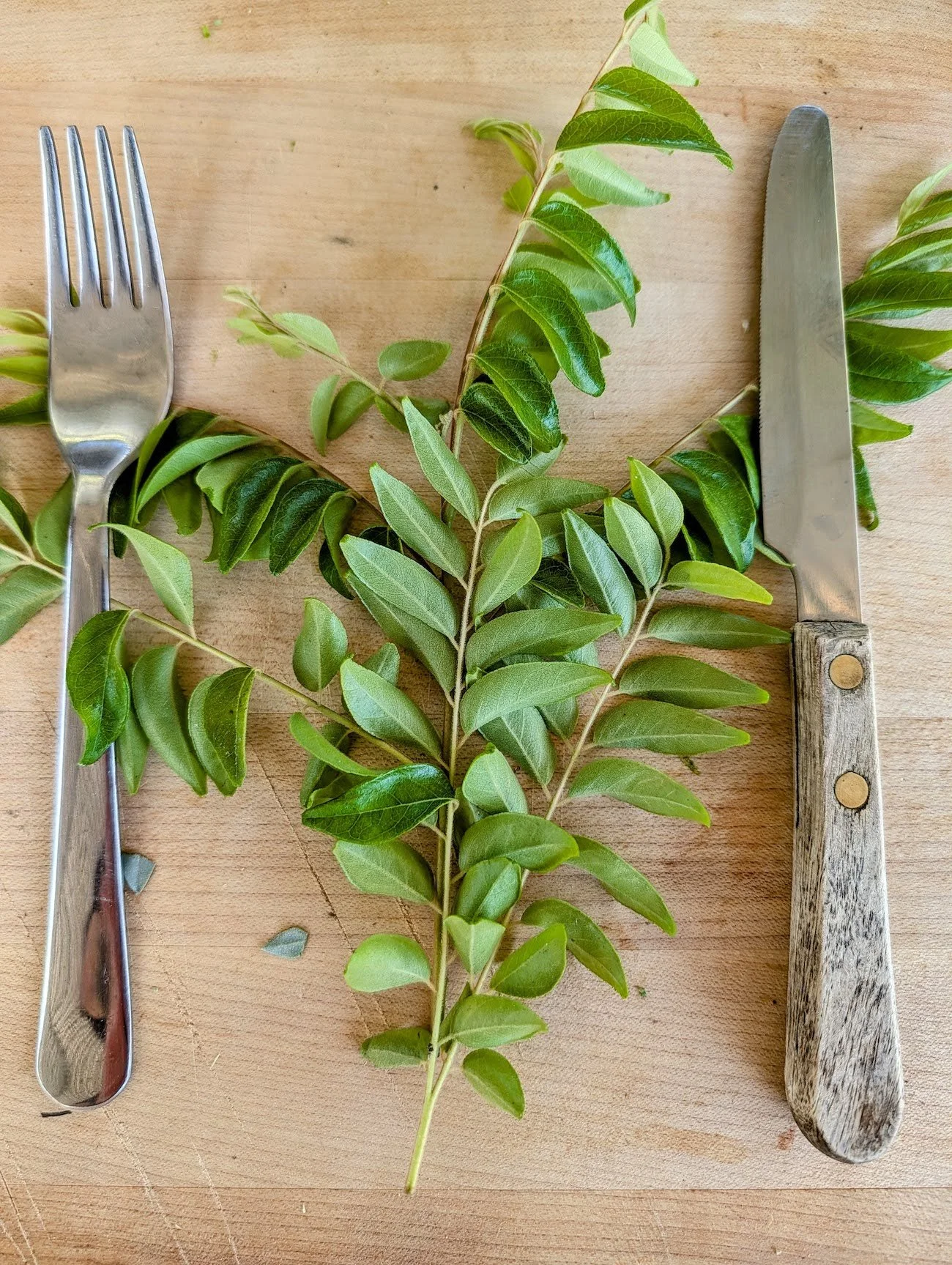

7. Curry leaf (Murraya koenigii)
Nothing to do with curry powder. Fry a few leaves in hot oil and a nutty, citrusy perfume fills the kitchen — the opening note of countless Indian dishes.
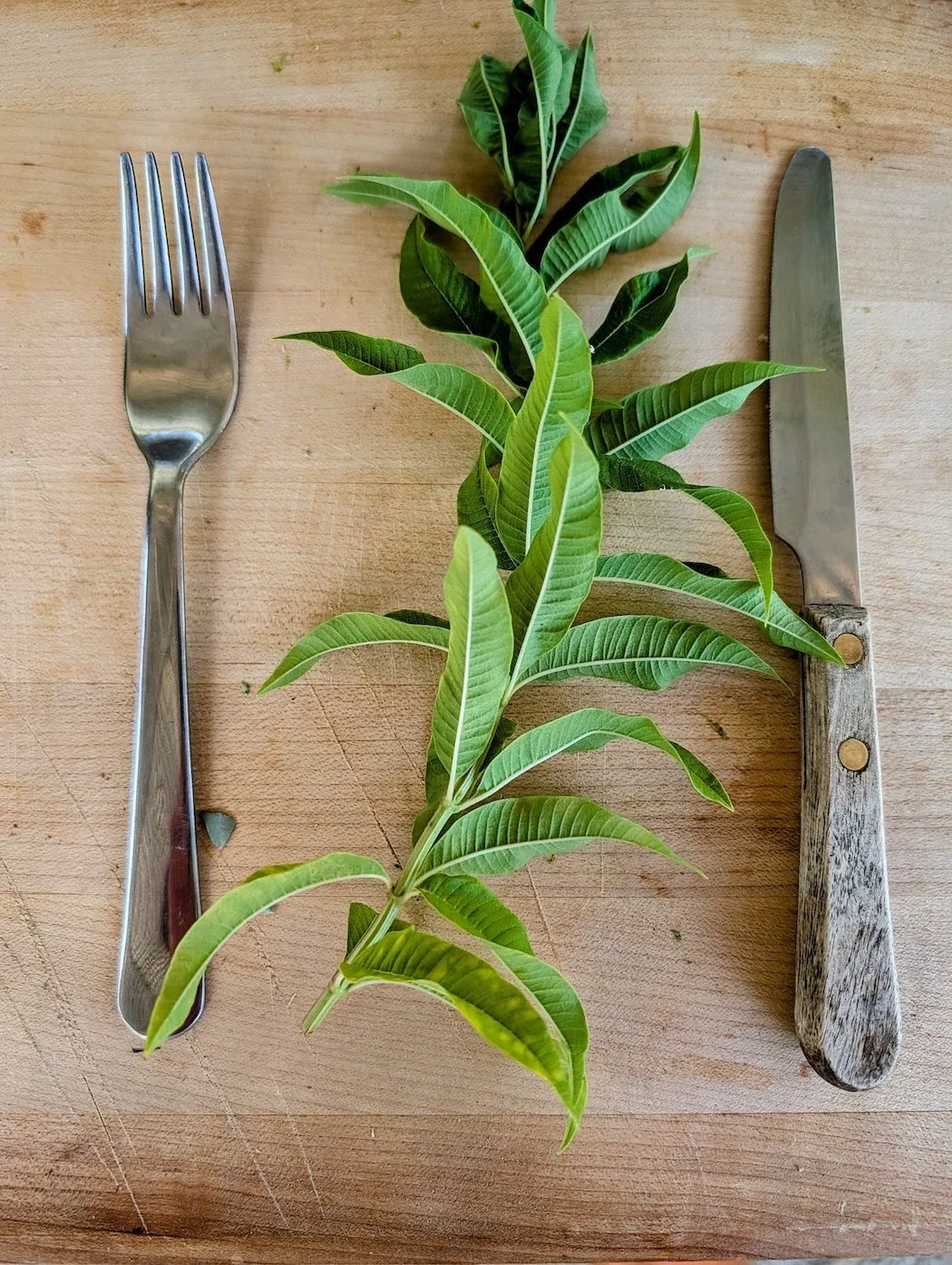
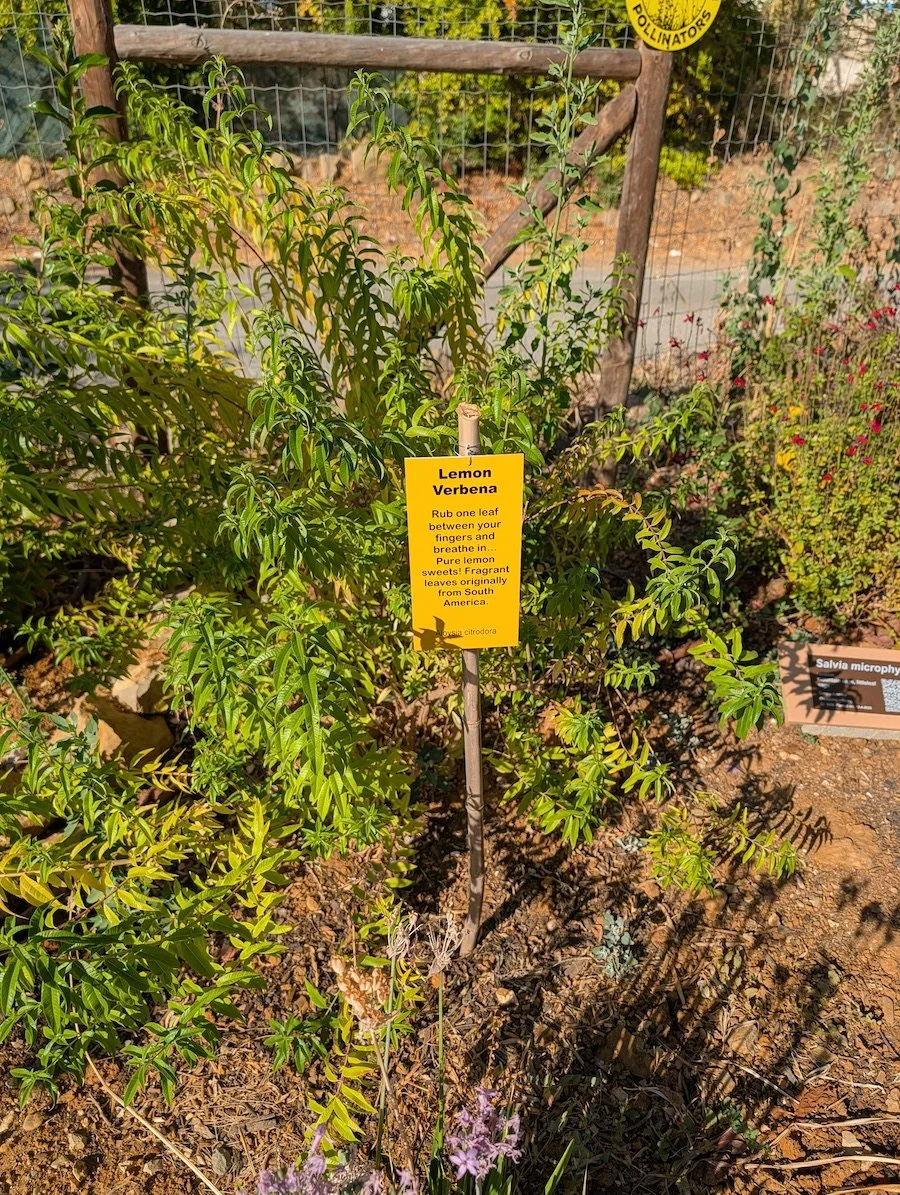
8. Lemon verbena (Aloysia citrodora)
Perhaps the purest lemon scent in the plant world. Fresh or dried, it makes a wonderful infusion and lifts any fruit salad.
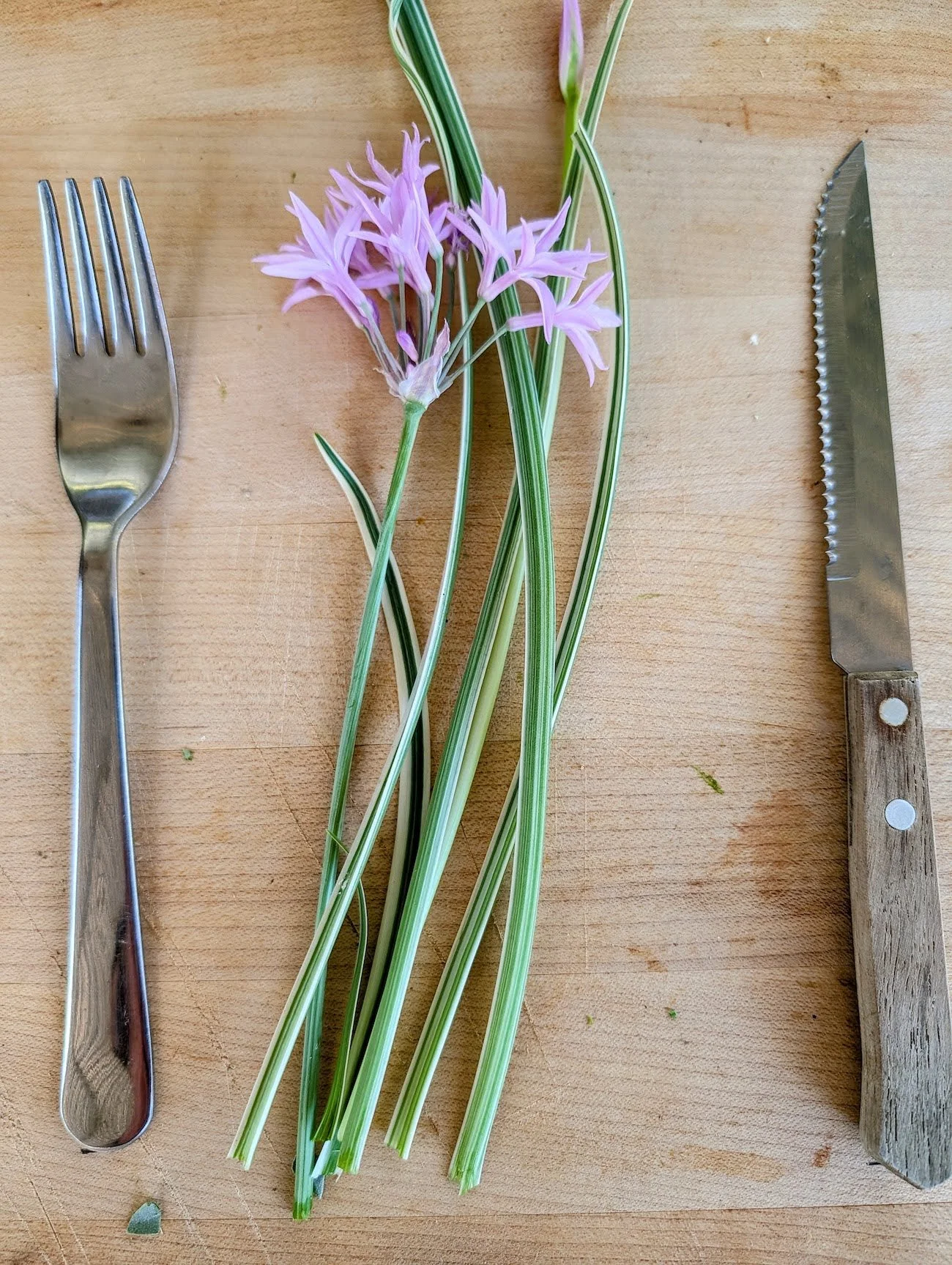
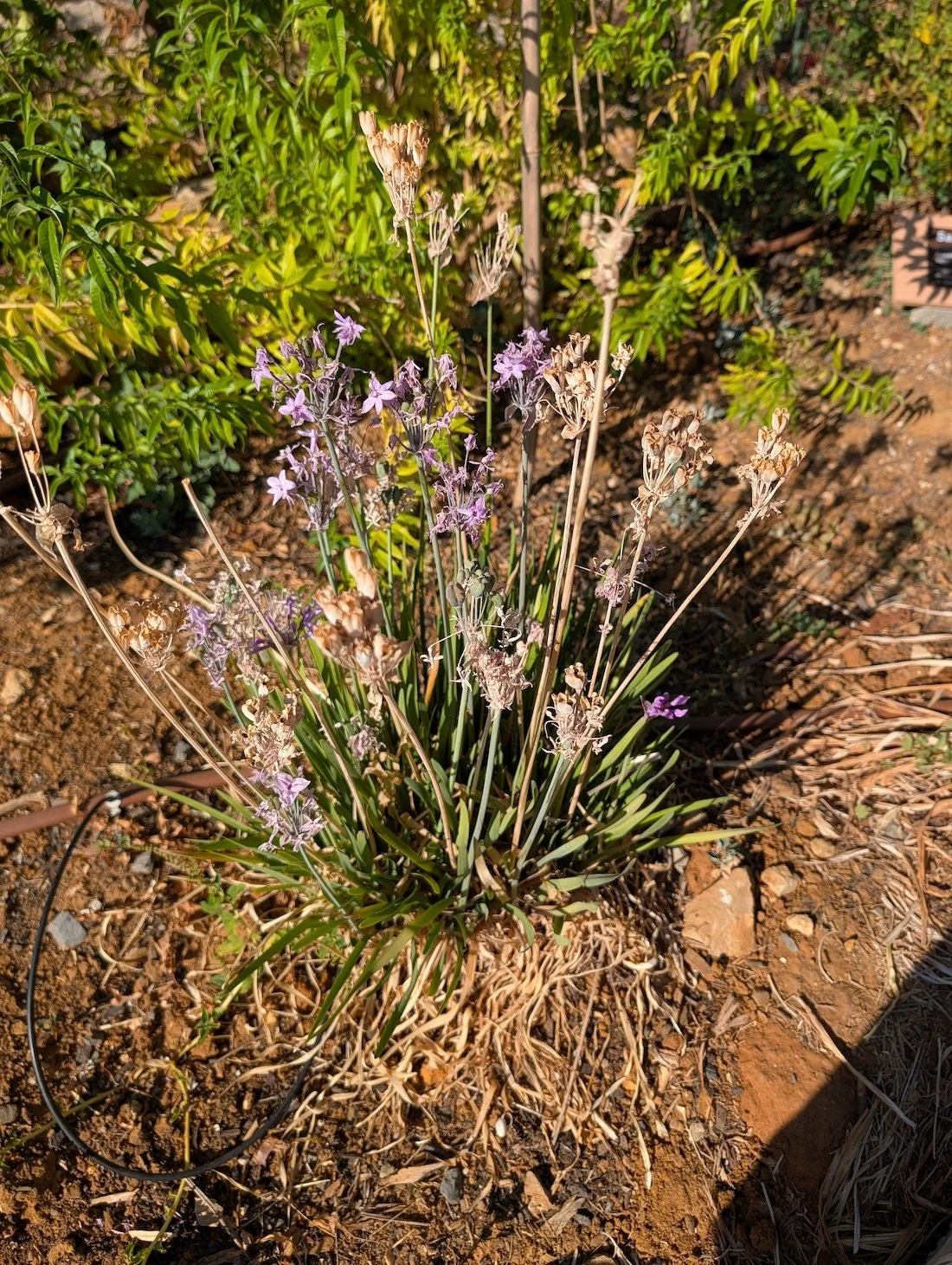
9. Society garlic (Tulbaghia violacea)
Leaves and pink flowers with a mild garlic taste. The flowers turn a plain salad into something beautiful.
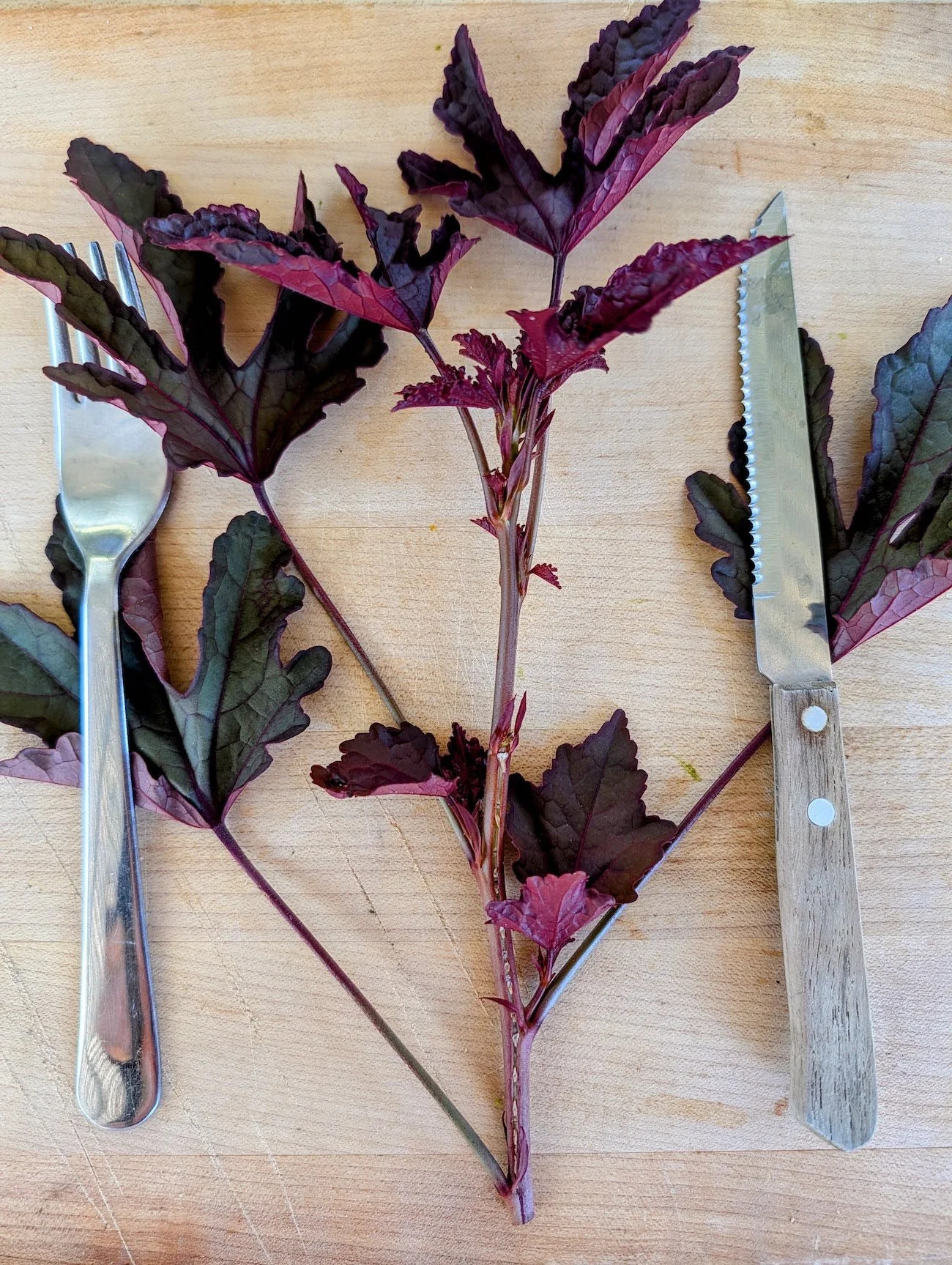
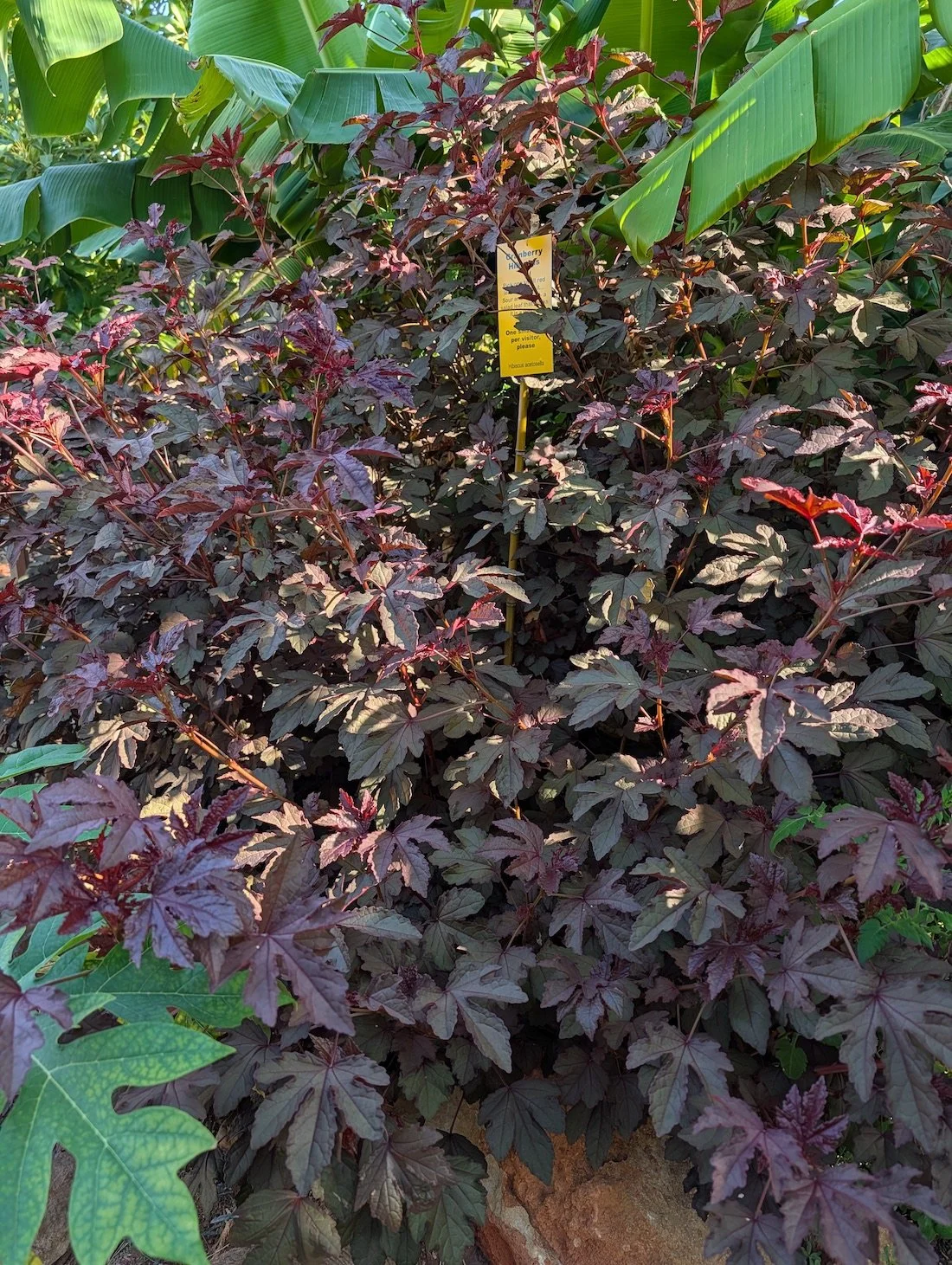
10. Cranberry hibiscus (Hibiscus acetosella)
Deep burgundy leaves with a pleasant sour tang, like sorrel. A few young leaves bring colour and acidity to a summer salad.
Always identify a plant with certainty before tasting. This information is educational only.
Most of these plants grow in our garden — come and meet them in person on a self-guided tour.
This article was written by Miguel COTTON — the Orchard’s founder. If you have any questions or suggestions, do not hesitate to contact us. miguel@orchardofflavours.com
🌿 Frequently asked questions about edible leaves
-
Several trees grown for food have edible leaves, not just fruit. Moringa (Moringa oleifera), Chinese toon (Toona sinensis) and curry leaf (Murraya koenigii) are three well-known examples. All three grow in the Algarve and in other warm, dry regions.
-
The young leaves of cranberry hibiscus (Hibiscus acetosella) are edible. They taste pleasantly sour, like sorrel, and are used fresh in salads. Always identify the exact species first — not every hibiscus is grown for eating.
-
When lettuce stops growing in the heat, tree leaves and drought-tolerant plants take over. Saltbush (Atriplex halimus) grows on almost no water, and moringa keeps producing new leaves all summer. Both can be eaten fresh or cooked.
-
All of these plants grow here, at the Orchard of Flavours (Pomar dos Sabores), a non-profit botanical garden in Luz de Tavira, near Tavira in the Algarve. You can meet them in person on a self-guided tour, booked online.