
The Augmentorium: An "Alcatraz" for Fruit Flies
— How we control the Mediterranean fruit fly at the Orchard of Flavours — without chemicals
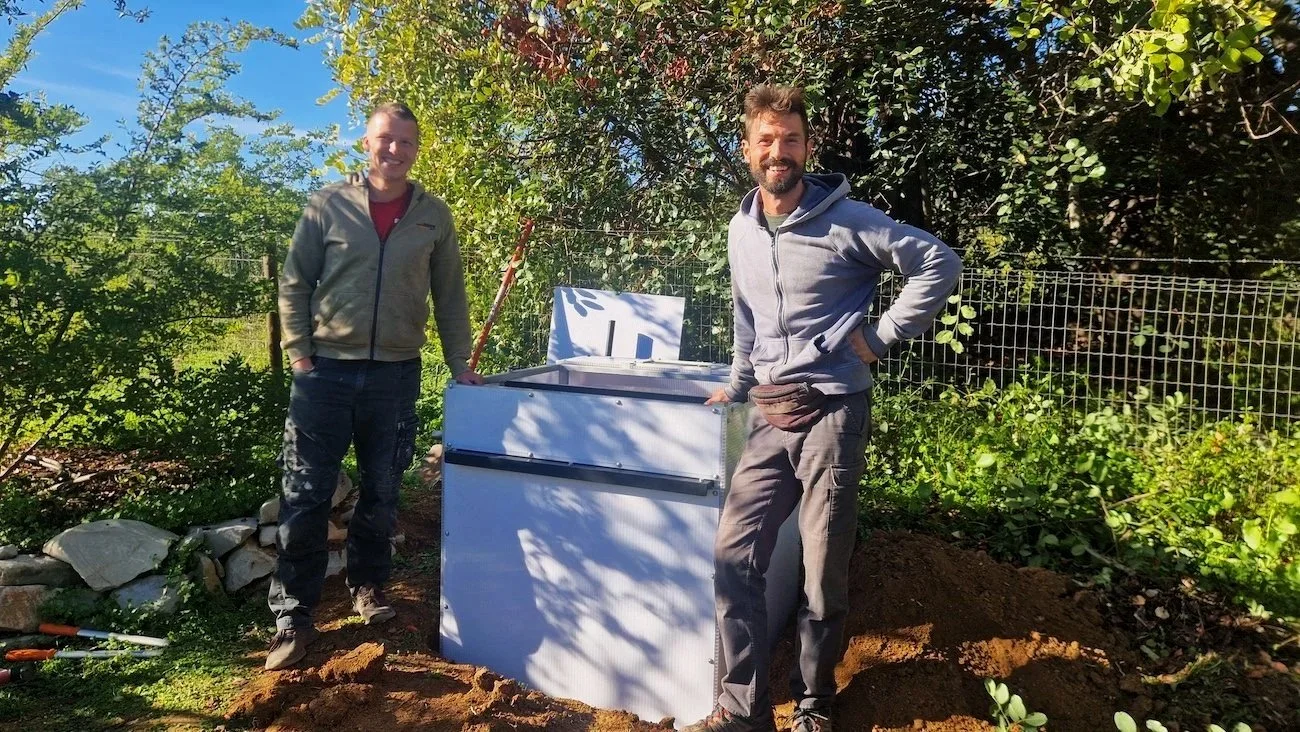
A tiny insect, big trouble
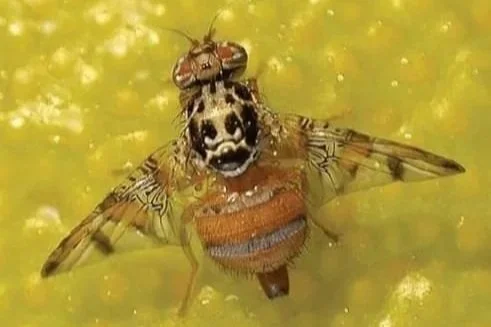
The Mediterranean fruit fly (Ceratitis capitata) is a small insect — adults are only about 4–5 mm long — but the damage it causes is enormous. The female lays her eggs inside healthy, ripening fruit. The larvae then feed and grow within, the fruit rots from the inside, and whole harvests can be lost.
Across the Mediterranean and beyond, growers spend a great deal of effort, and a great deal of pesticide, trying to keep this single insect in check. At the Orchard of Flavours we wanted a method that works with nature rather than against it. That method is the augmentorium.
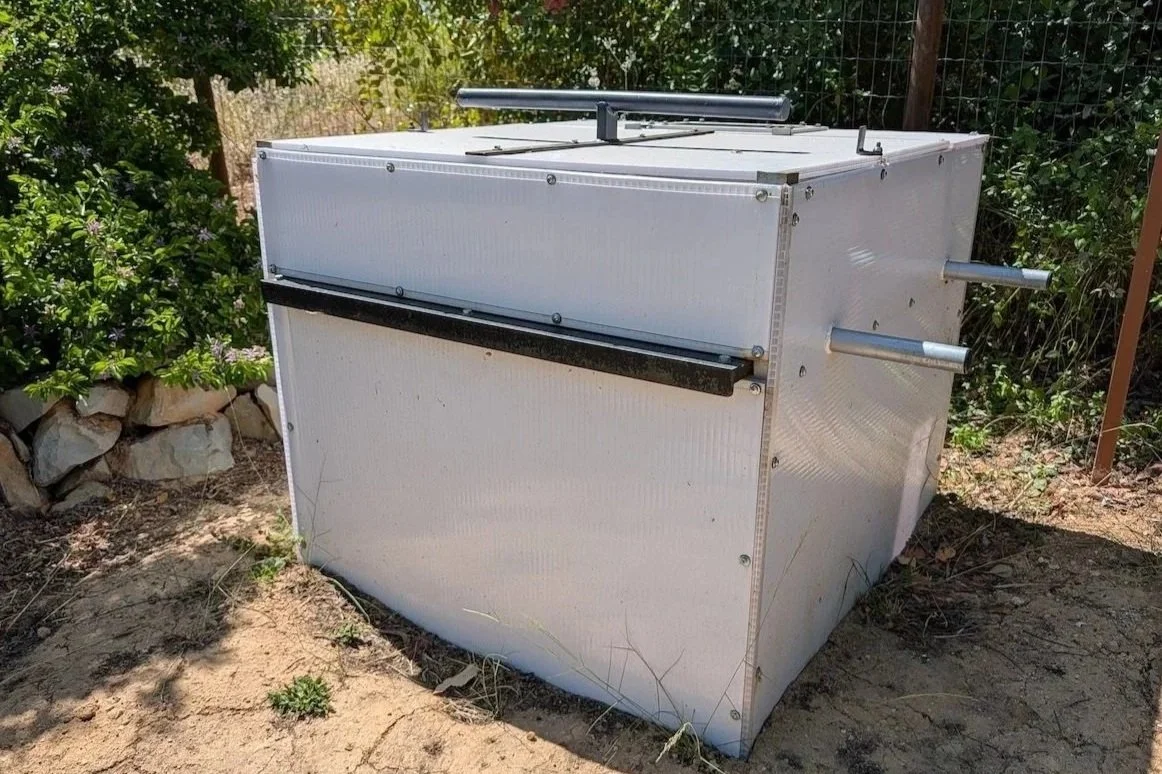
What is an augmentorium?
An augmentorium is a simple screened enclosure — essentially a tent or box covered in fine mesh. It receives fruit that is already infested with fly larvae, traps the adult flies that emerge inside, and lets their natural enemies escape back into the orchard. It was developed in the early 2000s by scientists in Hawaii as an ecological alternative to spraying.
Welcome to the Mediterranean fruit fly's worst nightmare.
How it works
The principle is wonderfully simple:
Fallen or damaged fruit is collected from the orchard and placed inside the box.
The larvae already inside that fruit continue to develop and eventually become adult flies.
Those adult flies cannot get out through the mesh — they are trapped.
Crucially, no fresh fruit means nowhere to lay new eggs, so the trapped generation simply lives out its life and dies.
No escape. No new fruit. No future generation.
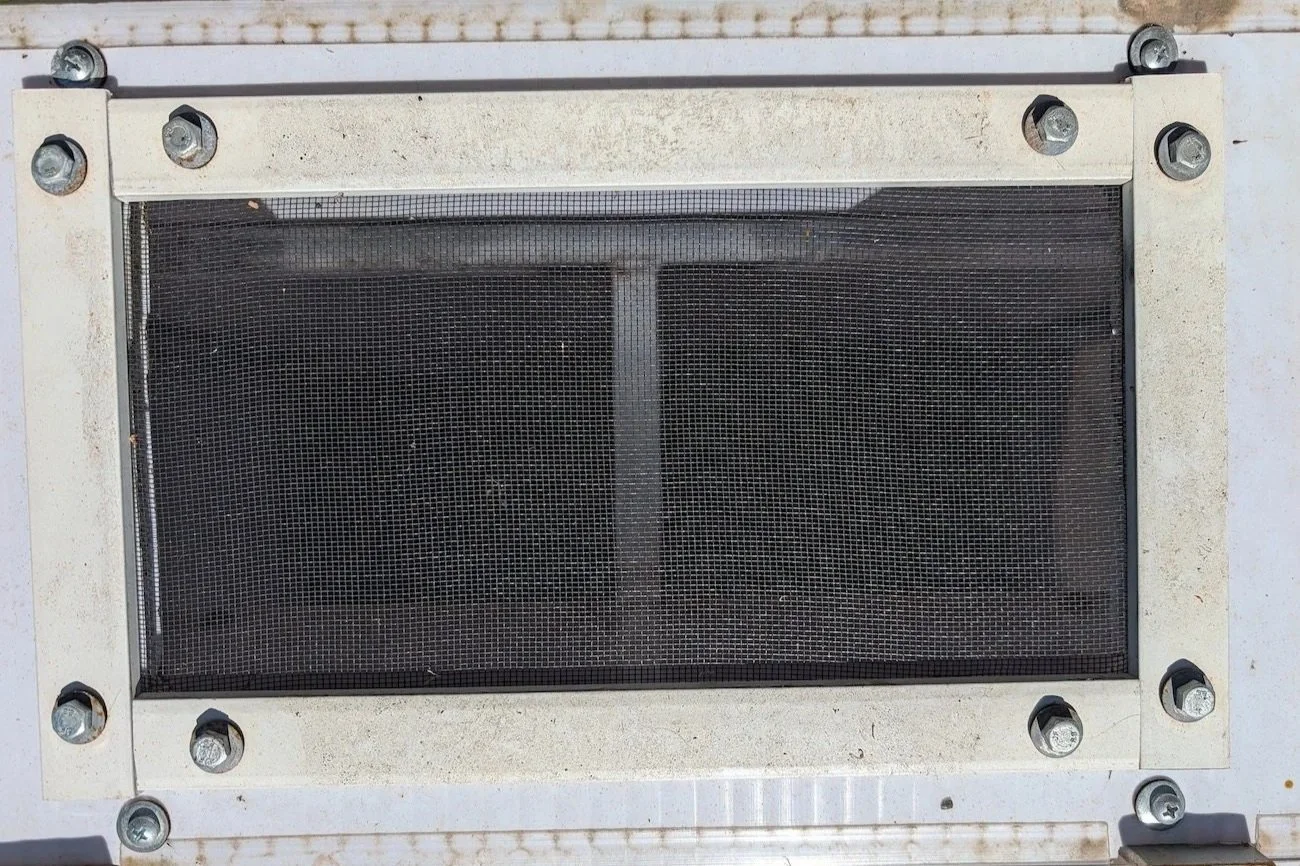
Why is there a mesh?
The mesh is the clever heart of the device, and it does two jobs at once:
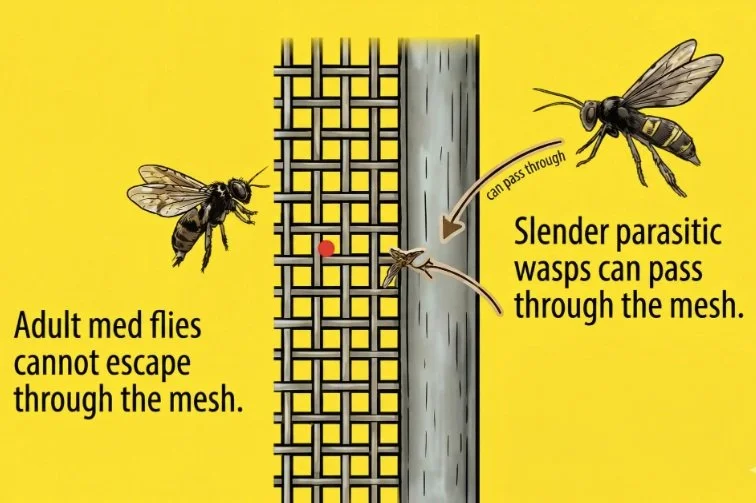
First, it lets in air, light, and rain, so conditions inside the box stay close to the natural outdoor environment and the flies complete their normal life cycle — but the openings are too small for an adult fruit fly to pass through. The flies stay trapped until they die.
Second, the same mesh is just open enough for parasitic wasps — the fruit fly's natural enemies — to slip through. These slender wasps can enter the box, find fly larvae inside the fruit, parasitise them, and then return to the orchard to keep hunting flies among the trees.
The result is elegant: pests are trapped, beneficial insects are helped, and nature controls nature.
Why it works in the long run
At a certain point, we stop adding fruit to the box.
From that moment, the adult flies inside have no fresh fruit in which to lay eggs.
The old fruit simply decomposes and cannot support any new generation.
With no new fruit and no way out, the population inside the box collapses on its own. As a bonus, what remains can eventually be composted.
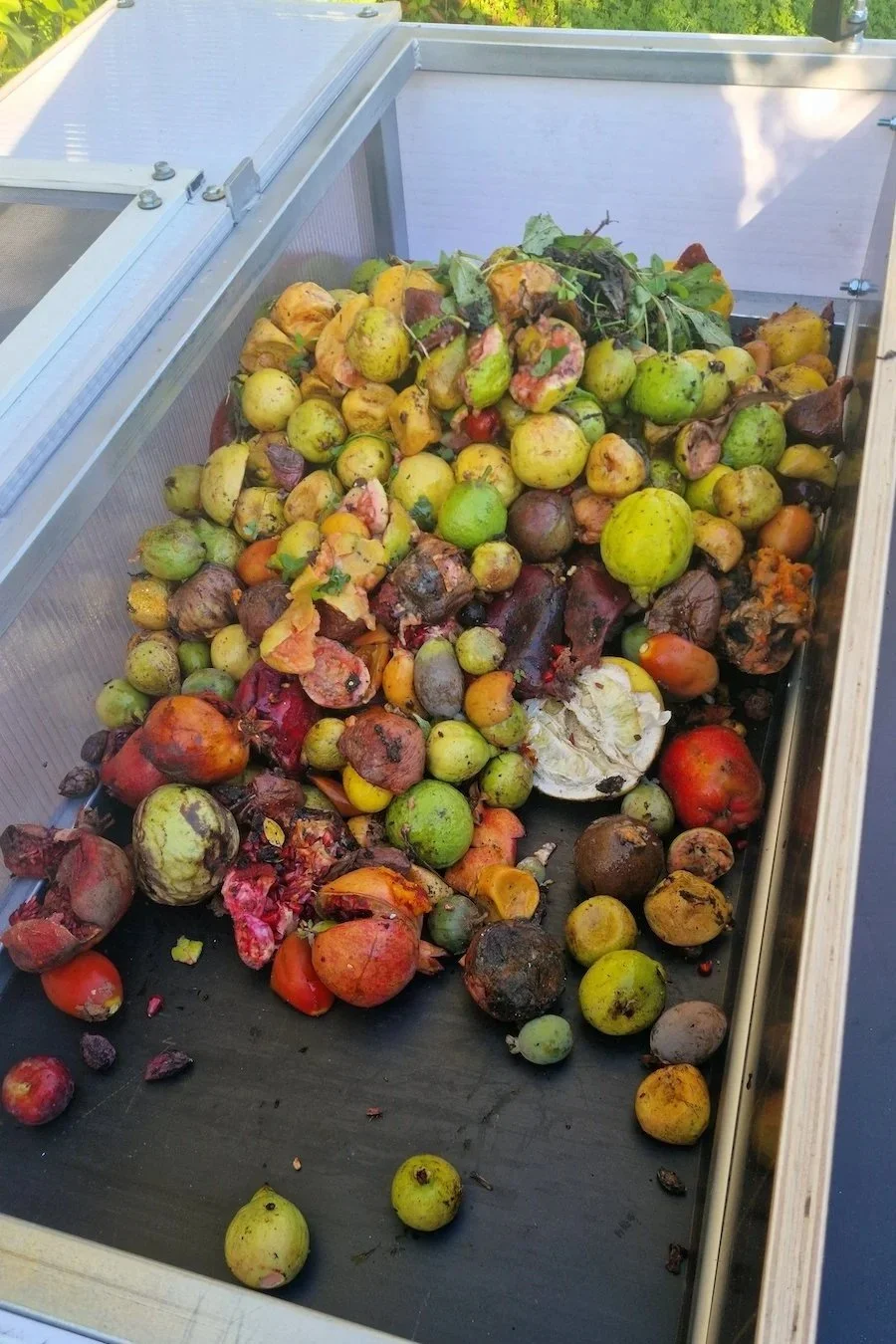
Mediterranean fly-infested fruit inside the augmentorium’s first chamber
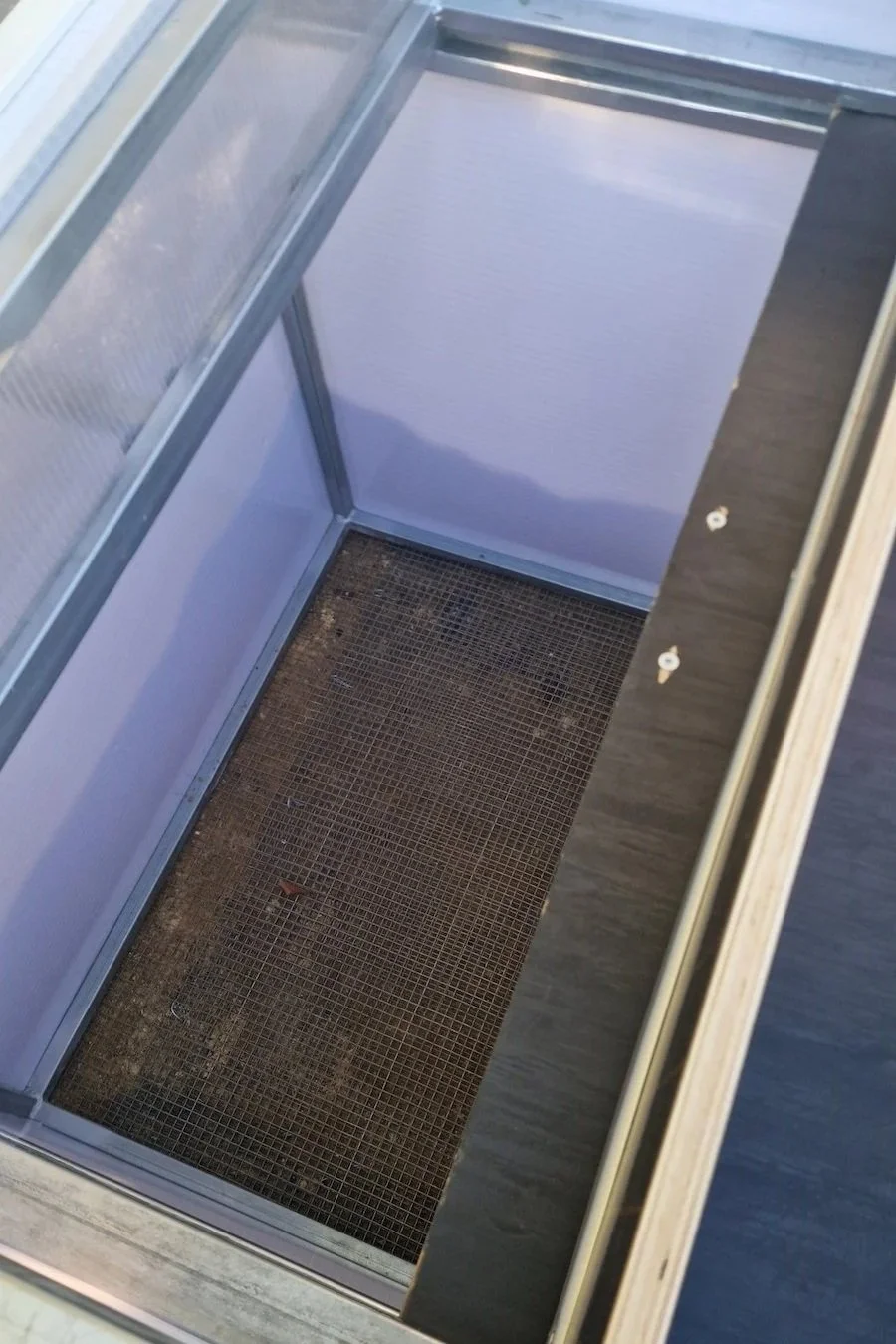
Below the second lid, inside of the augmentorium second chamber
Important: the 8-week rule
After the last batch of fruit is added, the box should be left closed for about eight weeks. This gives time for all remaining larvae to mature into adults and for those adults to die off. Only then is the material inside safe to compost or spread on the garden.
Our own augmentorium — a project in progress
In November 2025 we began building and testing our own augmentorium here at the Orchard of Flavours, adapted to our subtropical food forest and our Algarve climate. This is an active experiment: we are observing how well it performs under local conditions, which mesh works best, and how it fits into the rhythm of our orchard.
What makes this especially interesting is how rarely the technique has been tried in our part of the world. The augmentorium has been studied and used mainly in Hawaii and on Réunion Island, with only limited research trials reported so far in continental Europe. As far as we are aware, ours may be among the first attempts to put a working augmentorium to practical use in a Portuguese — and perhaps continental European — orchard setting.
But we would love to be proven wrong! If you know of another garden, farm, or research group using an augmentorium in Europe, or if you have tried one yourself, please get in touch (miguel@orchardofflavours.com) — we are keen to compare notes, share what we learn, and connect with others exploring chemical-free ways of living alongside the fruit fly.
(A detailed write-up of how we built ours, and what we are learning, will follow here soon)
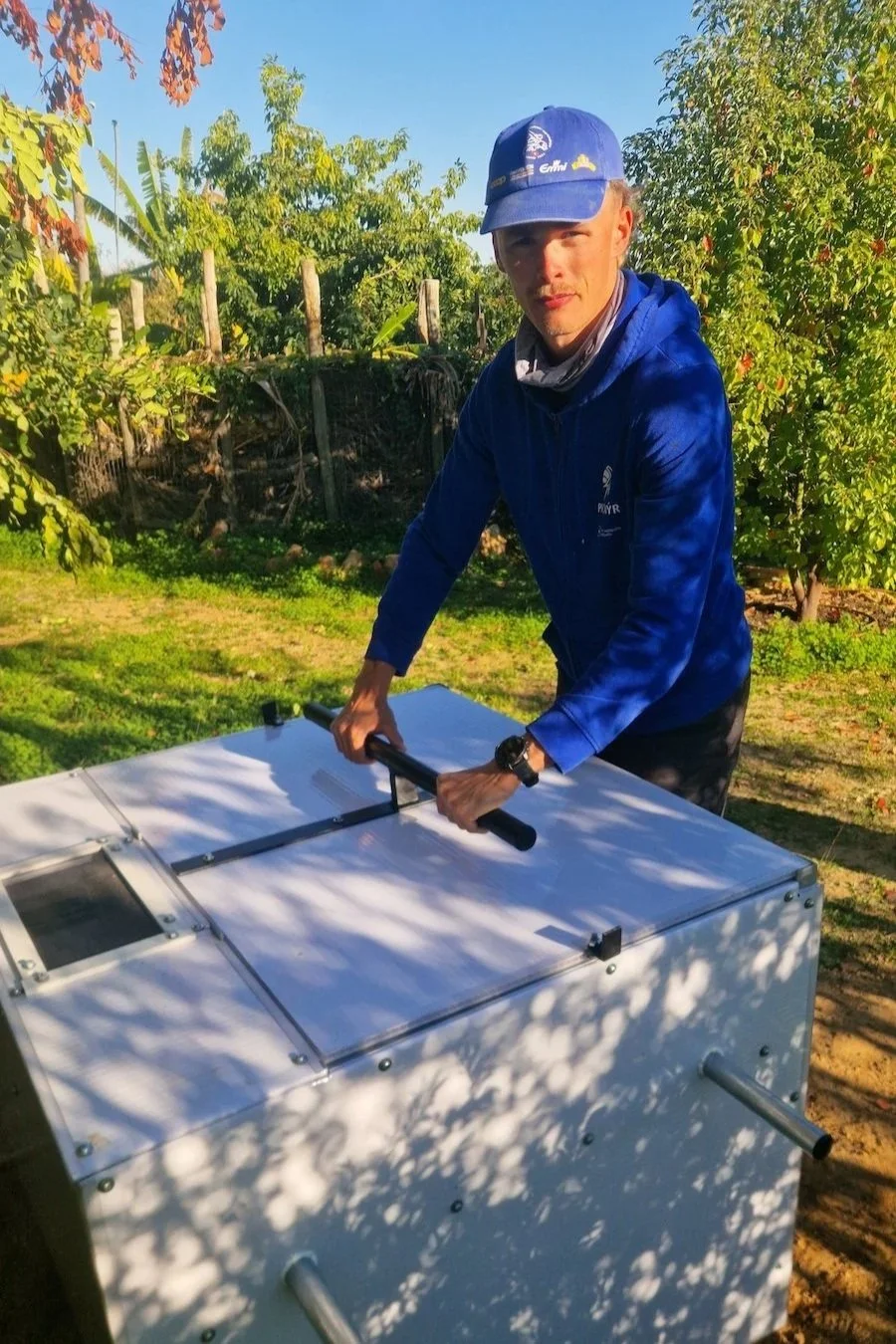
Step 1: removing the top lid
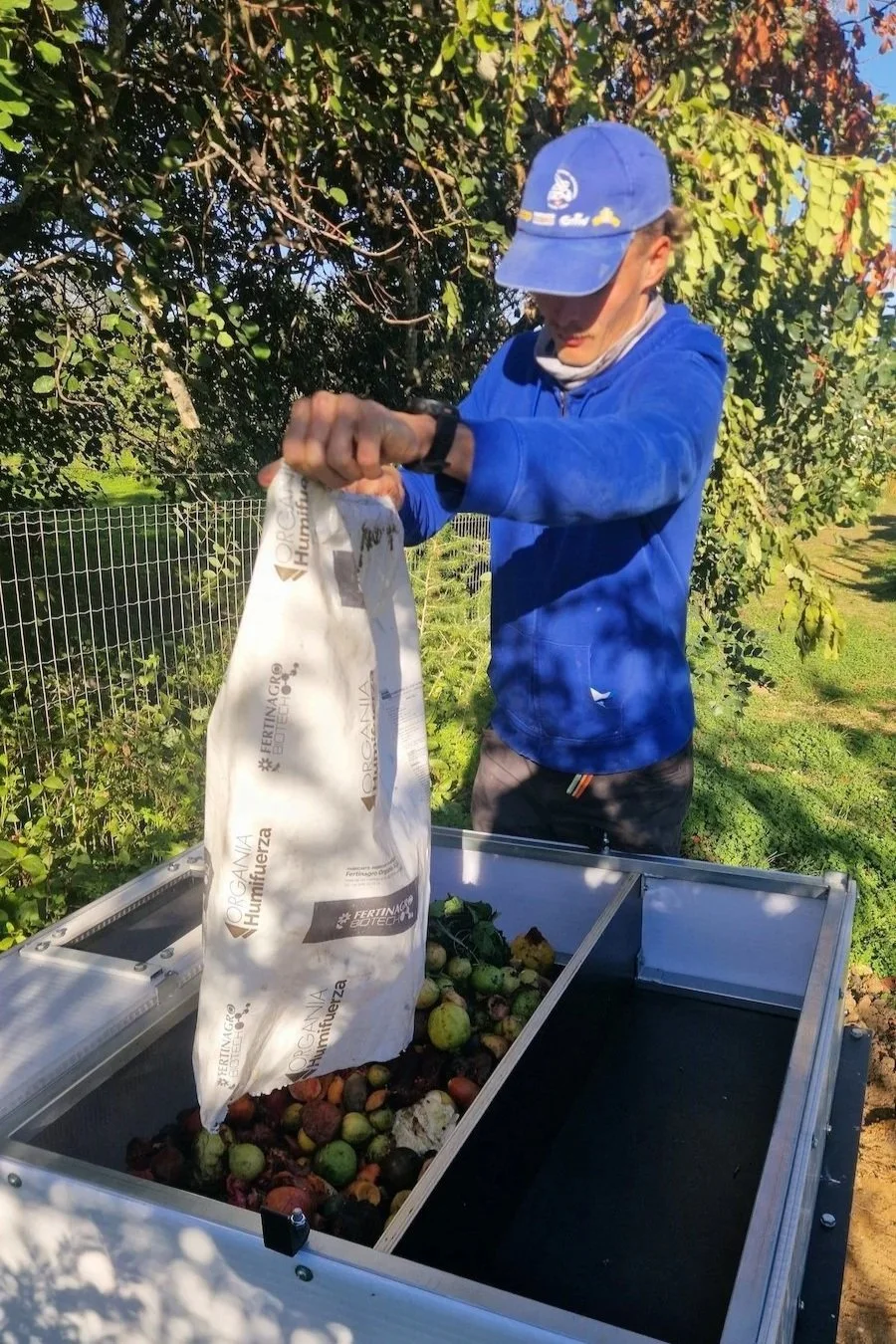
Step 2: adding infested fruit to the first chamber
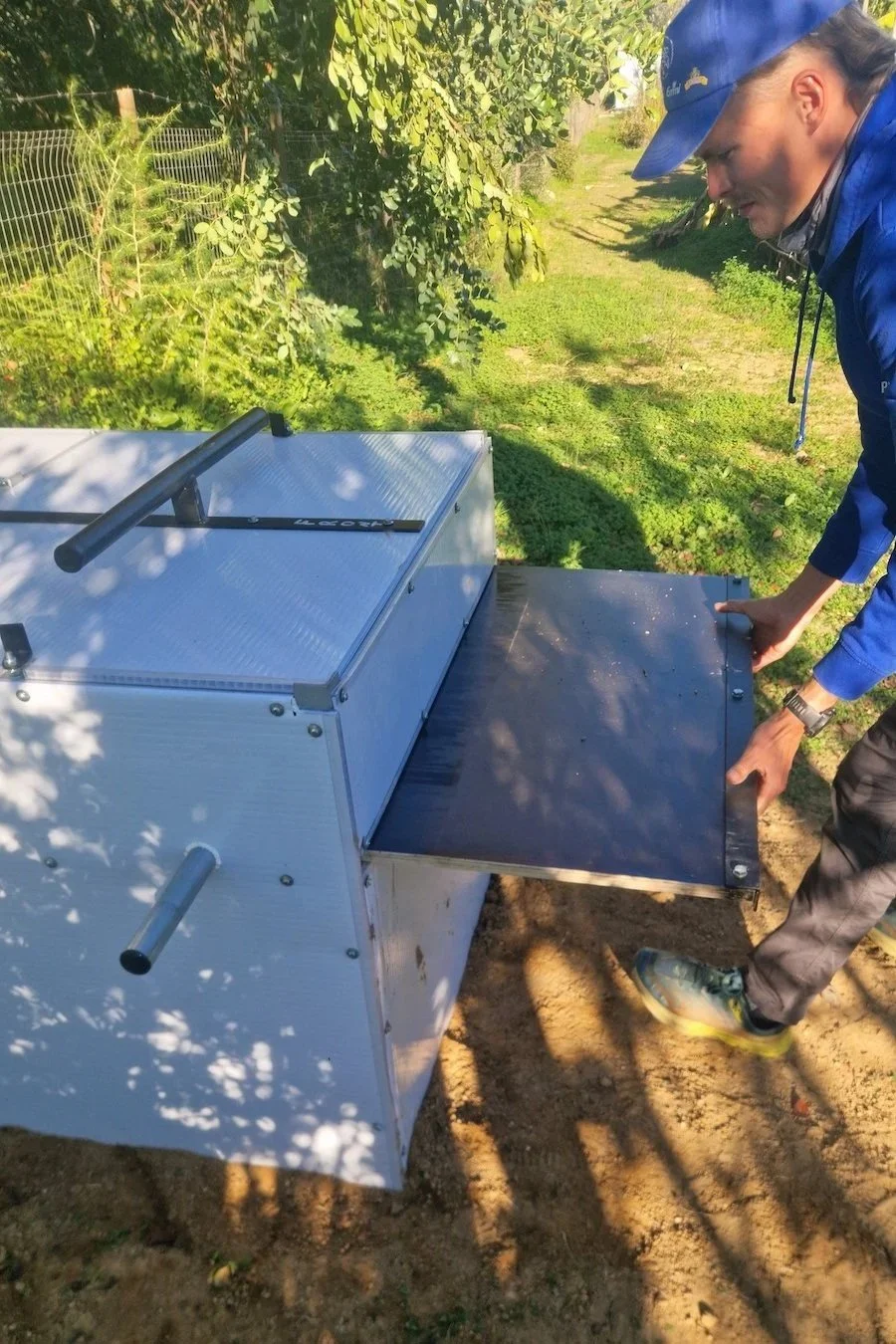
Step 3: letting fruit drop to second chamber
Learn more
For those who would like to study the technique in more depth, these are good starting points. The augmentorium has been tested against many fruit fly species; the references below are those most relevant to the Mediterranean fruit fly (Ceratitis capitata):
Deguine, J.-P., Atiama-Nurbel, T., and Quilici, S. (2011) — “Net choice is key to the augmentorium technique of fruit fly sequestration and parasitoid release” — Crop Protection. A field-oriented study on Réunion Island whose selected mesh achieved 100% sequestration of adult Mediterranean fruit flies (alongside two other species) while releasing their parasitoids:
https://www.sciencedirect.com/science/article/abs/pii/S0261219410003042Desurmont, G.A., Tannières, M., et al. (2022) — “Identifying an optimal screen mesh to enable augmentorium-based enhanced biological control of the olive fruit fly (Bactrocera oleae) and the Mediterranean fruit fly (Ceratitis capitata)” — Journal of Insect Science. A study from the USDA's European laboratory in France that tested several meshes specifically against the Mediterranean fruit fly, finding one that retained 100% of adult flies while letting the parasitoids escape. It also notes how rarely the technique has been applied against the medfly:
https://academic.oup.com/jinsectscience/article/22/3/11/6594368Ricciuti, E. (2022) — “Pests Stay In, Parasitoids Fly Out: The Augmentorium for Biological Control in IPM” — Entomology Today. A short, readable summary (no scientific background needed) of the augmentorium and its use against the olive fruit fly and the Mediterranean fruit fly:
https://entomologytoday.org/2022/06/10/pests-parasitoids-augmentorium-biological-control-integrated-pest-management/Klungness, L.M., Jang, E.B., Vargas, R.I., et al. (2005) — “New sanitation techniques for controlling tephritid fruit flies (Diptera: Tephritidae) in Hawaii” — Journal of Applied Sciences and Environmental Management. The original description of the augmentorium concept. Open-access hosting via African Journals Online (AJOL): https://www.ajol.info/index.php/jasem/article/view/17284
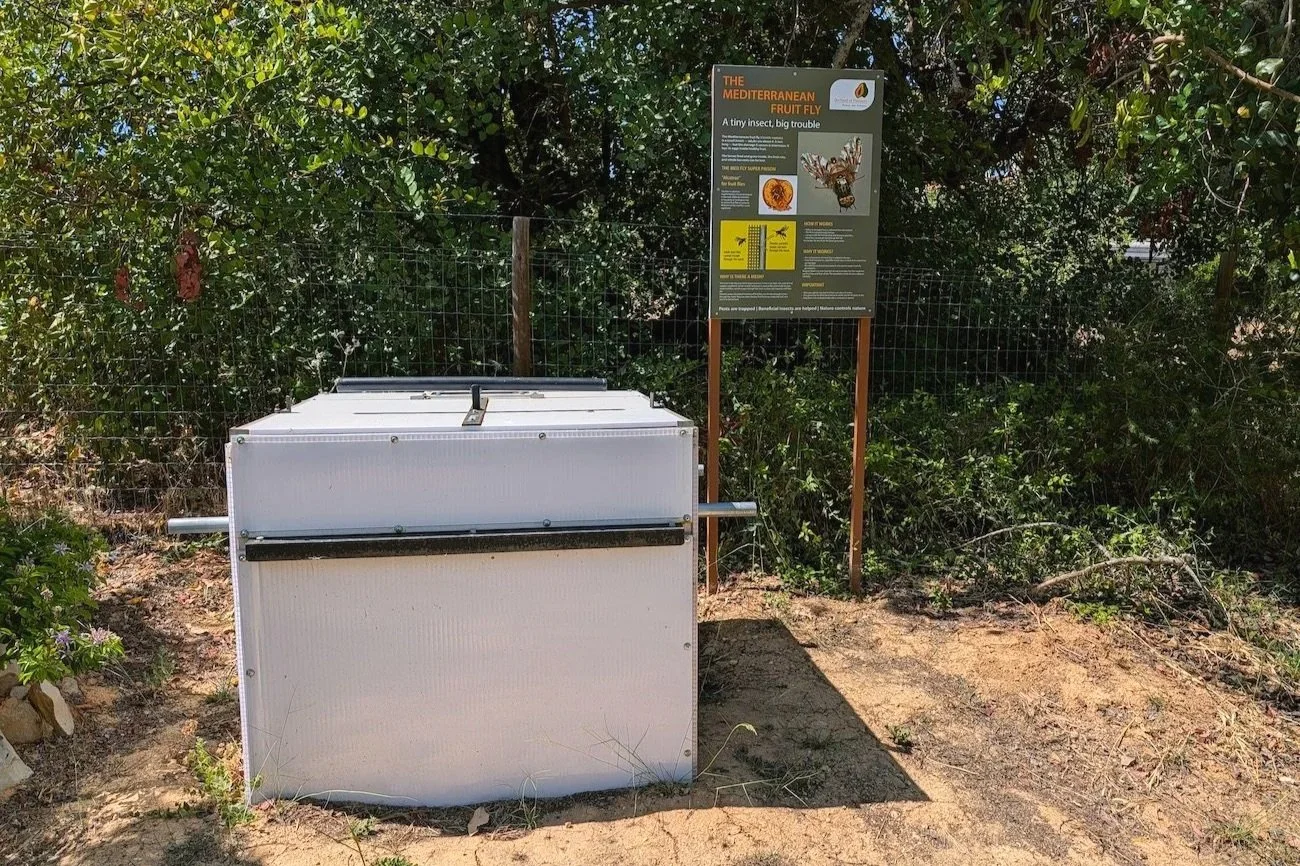
Our own homemade augmentorium. Come see it “in action” at the Orchard of Flavours botanical garden, in Tavira, Portugal
This article was written by Miguel COTTON — the Orchard’s founder. If you have any questions or suggestions, do not hesitate to contact us: miguel@orchardofflavours.com