
Muntingia Calabura Growing Guide for Mediterranean Climates
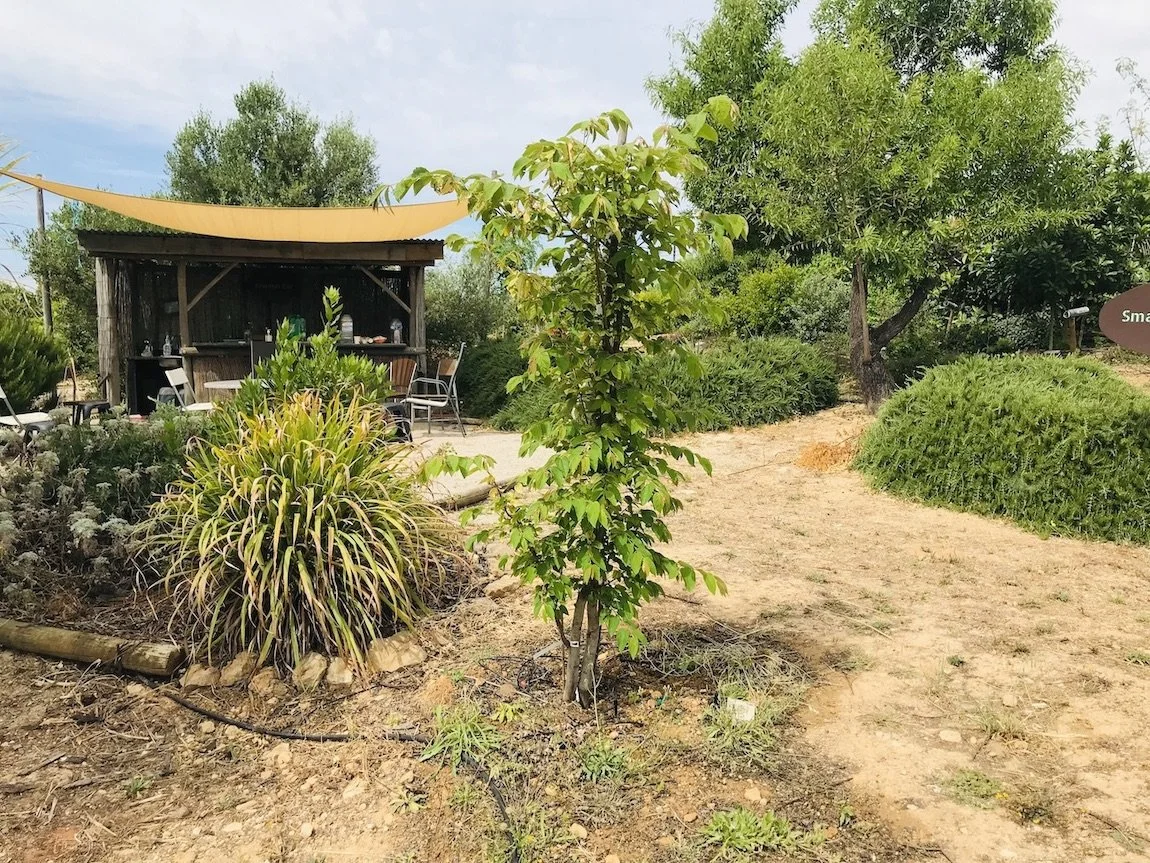
Quick Tree Profile
Scientific Name: Muntingia calabura
Common names: Jamaican cherry, Panama berry, cotton candy tree
Type: Fast-growing fruit tree
Origin: Central & South America
Current distribution: Widely grown across the tropics and subtropics
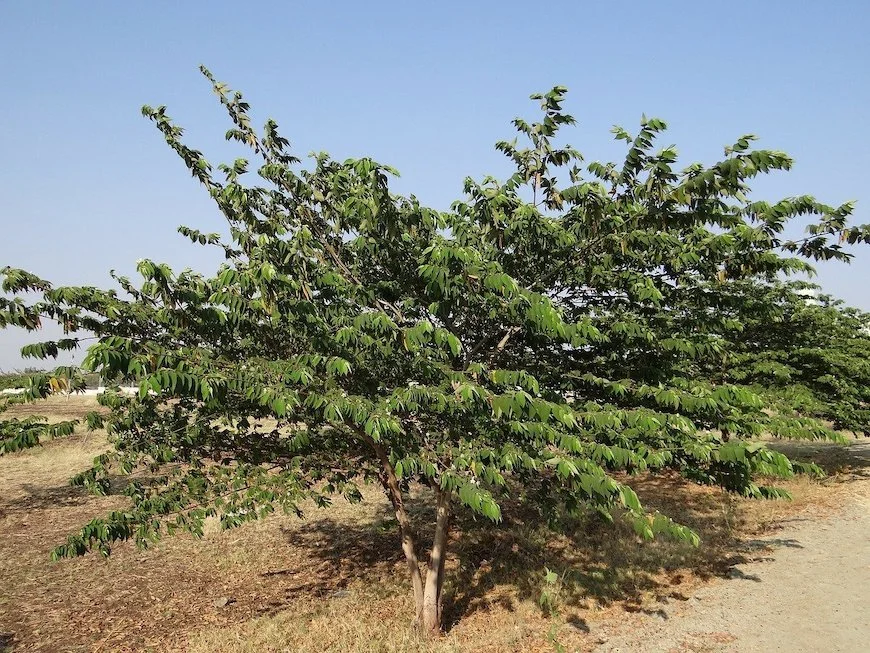
Adult size: 6–10 m (easily kept smaller)
First fruiting: 1–2 years
Lifespan: Short to medium (usually 8–15 productive years in Mediterranean climates, based on botanical garden observation)
Pollination: Self-fertile
Main uses: Fresh fruit, wildlife, pioneer tree
We’ll be covering quite a few different aspects about growing healthy and productive Muntingia calabura plants in our Southern European climate. Feel free to find the content you’re looking for in the index below:
JUMP TO —> Why Grow Muntingia calabura? — Climate Requirements — Sun & Site Selection — Soil Requirements — Water Needs — Planting Guide — Pruning & Size Control — Flowering, Fruiting & Harvesting — Pests & Diseases — Propagation — Ecological & Educational Value — Is Muntingia Calabura Right for You? — Scientific References & Further Reading
Why Grow Muntingia calabura?
Muntingia calabura is grown for speed, generosity, and joy.
In Mediterranean climates it stands out for:
Extremely fast growth
Very early fruiting
Long fruiting season in warm months
Strong attraction for birds and pollinators
High educational and visitor value
Originally native to the American tropics, this tree has followed human movement and is now widely planted across tropical regions. In many countries it is remembered as a childhood snack tree, eaten directly while playing.
At the botanical garden, this emotional connection is very clear. An Instagram reel we published about this fruit (see below) reached more than half a million people worldwide, with comments repeatedly saying: "This tastes like my childhood."
📚 Read more on the pioneer ecology and wildlife attraction of Muntingia calabura (American Journal of Botany, 1985)
Climate Requirements
Temperature
Best growth: 20–35 °C
Growth slows below 15 °C
Young trees are frost-sensitive
Mature trees tolerate only very light, brief frosts
Botanical garden observation: “During colder winters, Muntingia calabura may lose part of its leaves and behave as semi-deciduous. This is a normal cold-stress response. The tree re-leafs quickly in spring.”
Mediterranean Context
Best suited for warm coastal Mediterranean areas
Performs well in southern Portugal, coastal Spain, southern Italy, Greece, and islands
Inland frost pockets strongly reduce success
📚 Scientific study on the reproductive ecology and adaptation of Muntingia calabura in exotic climates (Revista Árvore, 2008)
Sun & Site Selection
Full sun is essential for good fruiting
Light shade tolerated in very hot inland sites
Protection from strong winds is important
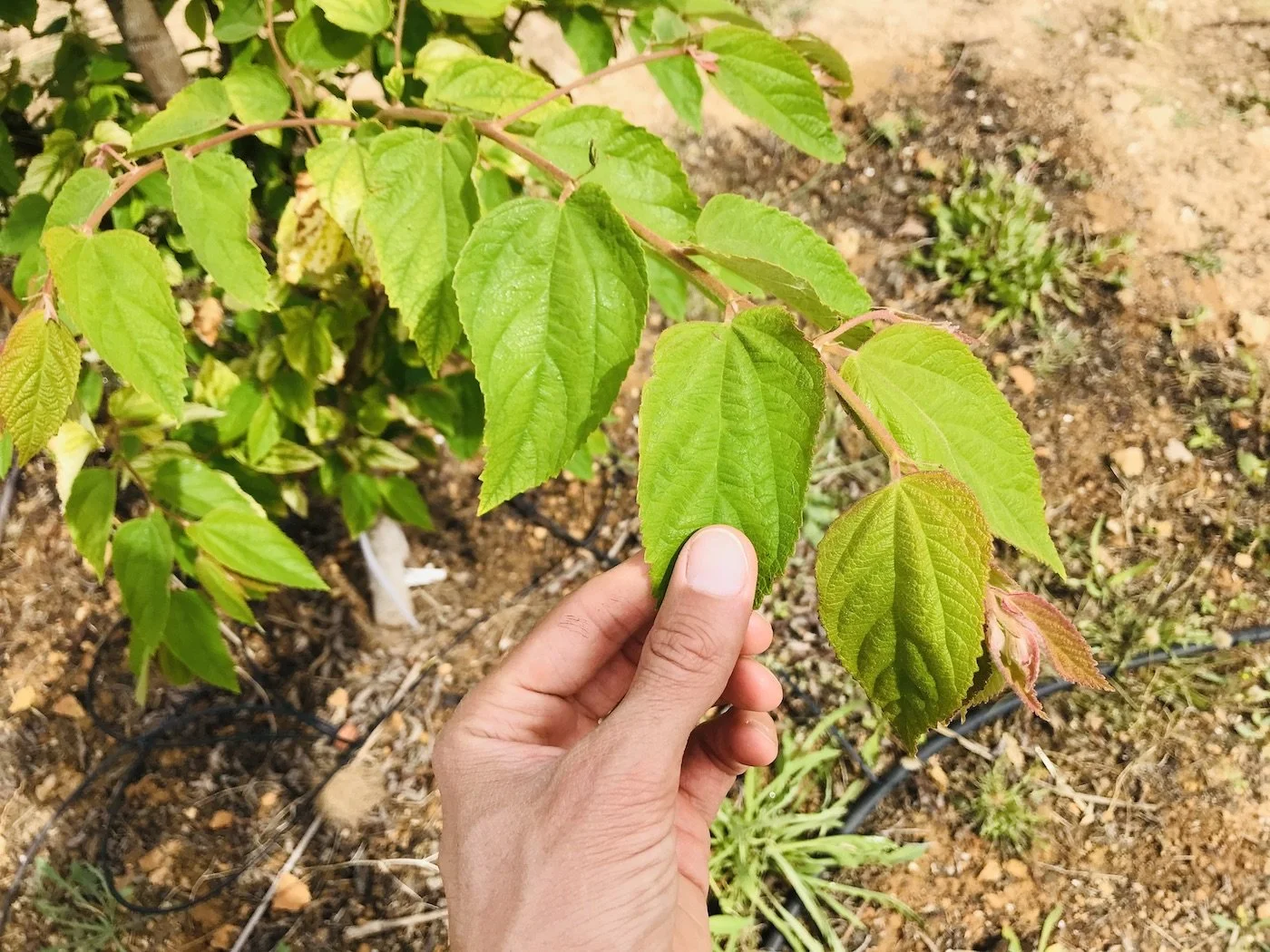
Best sites: south or south-west exposure, near walls or buildings that store heat. Avoid exposed hilltops and cold air pockets.
Soil Requirements
Soil Type & pH
Muntingia calabura is very adaptable. It grows in low-fertility but well-drained soils and performs best in living, biologically active soil. Avoid compacted or waterlogged clay.
The best pH range is slightly acidic to neutral. The tree also tolerates slightly alkaline (calcareous) soils. Strongly alkaline, very poor soils may slow growth. Adding organic matter usually prevents problems in Mediterranean soils.
Drainage
Drainage is more important than fertility. In heavy soils, raised planting is very useful.
Water Needs
Establishment
Regular watering is essential during the first months. As a starting point, water young trees deeply once or twice per week during summer. Warm soil + warm nights + water = very fast growth.
Mature Trees
Moderately drought tolerant once established. Fruit quality and production improve noticeably with irrigation during dry periods. A thick organic mulch is strongly recommended to conserve moisture and protect the root zone.
Planting Guide
Best Planting Time
Plant only when night temperatures stay above 20 °C. In Mediterranean climates, this means late May to September. The best months are May, June, or July.
Botanical garden observation: “Early planting with cool nights slows growth. Warm-night planting leads to explosive development.”
Planting Steps
Choose a sunny, sheltered spot
Dig a wide hole, around 1m by 70m
Improve drainage if needed
Do not bury the trunk collar
Water deeply and mulch well
Botanical garden observation: “In our heavy clay soil, we dig a 1 cubic meter hole and add around 200 liters of plain compost, 35 liters of well-composted horse manure, and 70 liters of acidic compost. We create a raised bed of a minimum of 35cm high.”
Fertilisation & Soil Care
Muntingia calabura is a light feeder. Apply compost once or twice per year—ideally at the end of winter, and optionally again in early autumn. Avoid excess nitrogen, which causes too much leaf growth and a weak structure. If your soil tends to be alkaline, you might need to add iron chelate twice a year (EDDHA formula).
In Mediterranean systems, soil life matters more than fertiliser.
Pruning & Size Control
Why Prune?
Control height
Reduce wind damage
Encourage branching and fruiting
When to Prune
The best time is late winter or early spring. Light summer pruning is also possible. Keeping the tree low and wide improves stability and ease harvesting.
Flowering, Fruiting & Harvesting
Flowers
Small white flowers are produced during warm periods. They are very attractive to insects.
Fruits
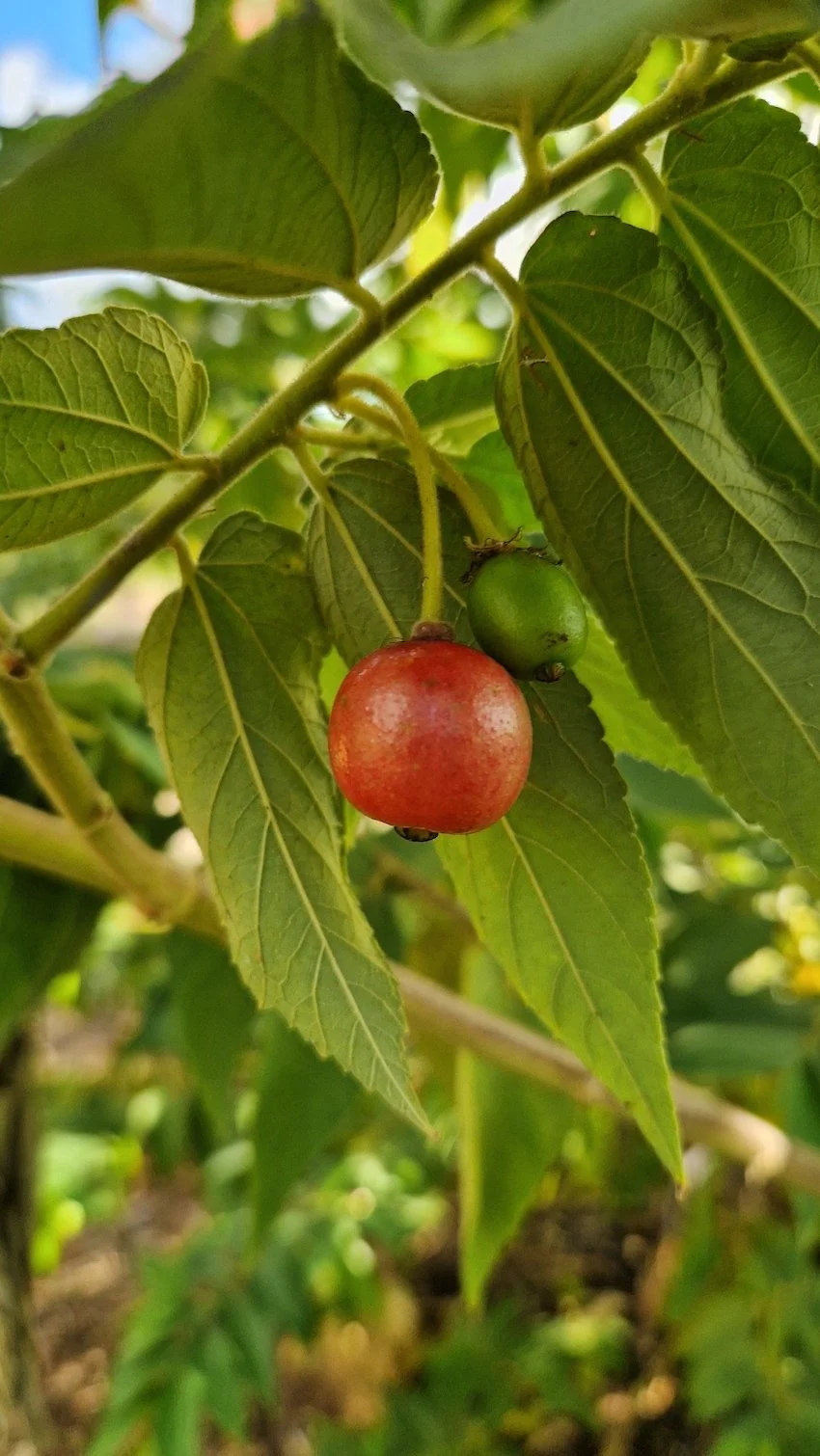
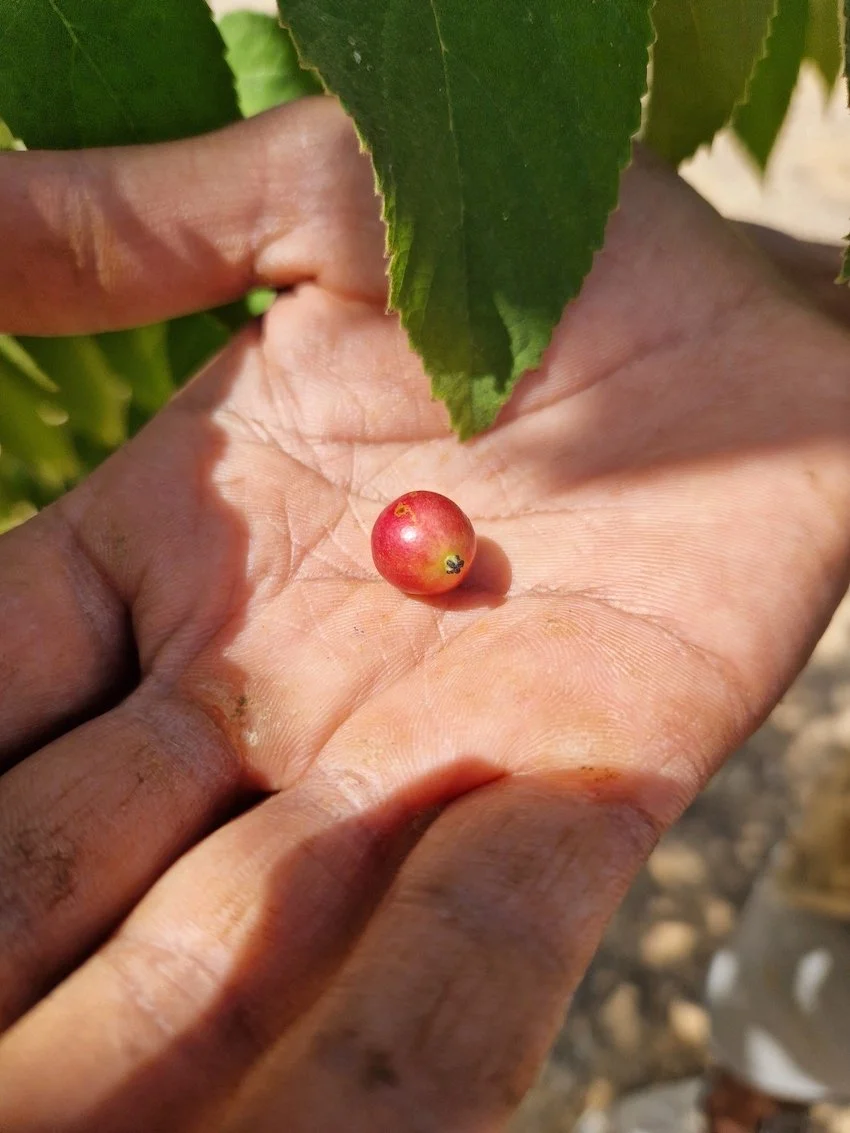
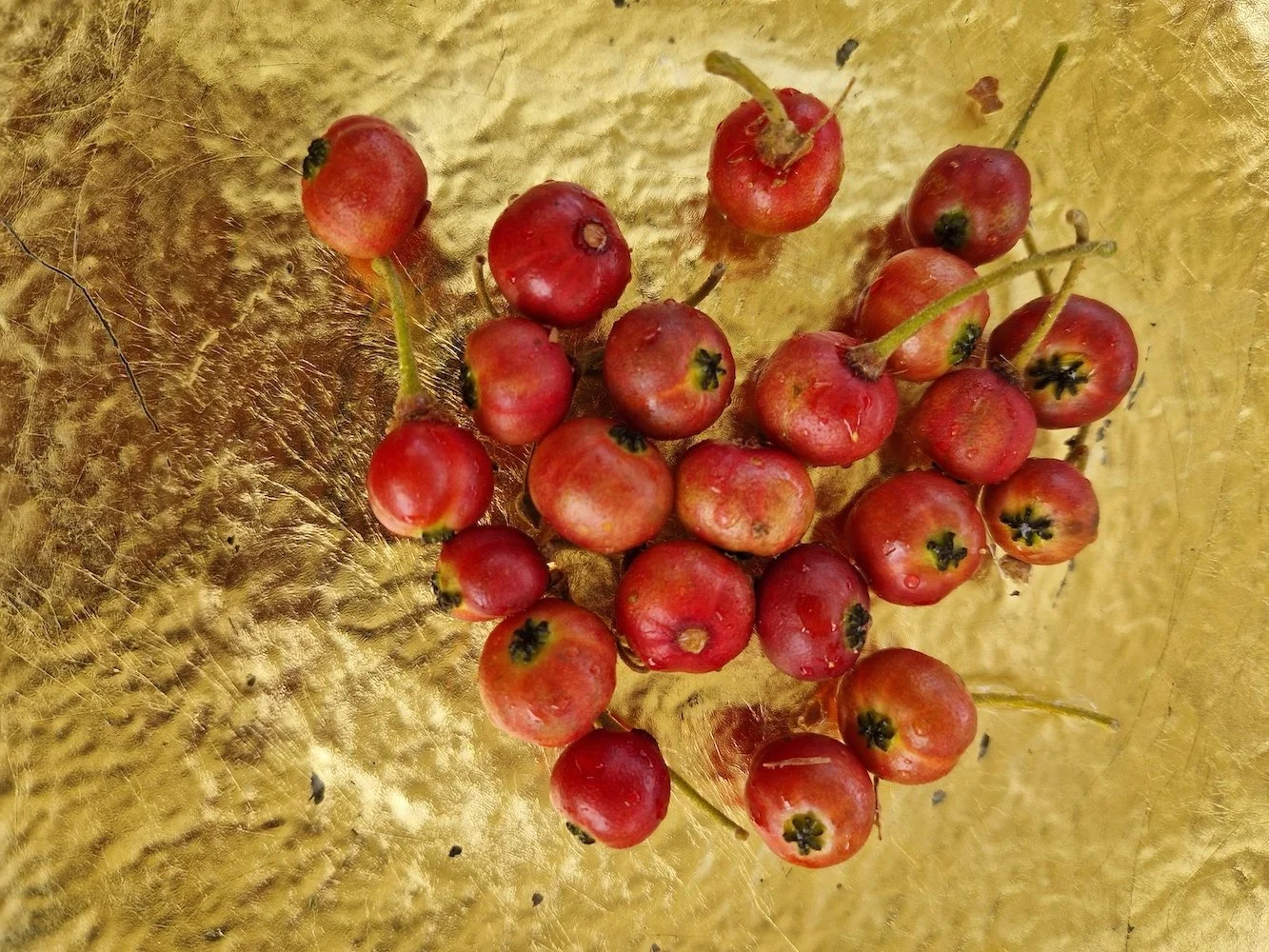
Small red berries with an extremely short shelf life. They must be eaten fresh.
Taste (very distinctive): Very sweet. Often described as cotton candy, sweet popcorn, or light caramel. Because of this flavour, the tree is often called the "cotton candy tree."
Mediterranean fruiting pattern: The main season runs from July to November. Some fruits may appear in winter but are usually less sweet due to low sun intensity.
Harvesting
Fruits ripen daily. Pick them when fully red. Shelf life is only a few hours. This is not a market fruit. It is a snack tree, especially loved by children.
📚 Analysis of the sugars and volatile compounds responsible for the fruit's unique flavor (Food Research International, 2018); Latest research on the nutritional profile and bioactive potential of the berries (Journal of Food Science, 2025)
Pests & Diseases
Muntingia calabura is generally very resistant, and few problems have been observed in Mediterranean climates. Birds are the main competitors for ripe fruit.
In warm, humid autumns, keep an eye out for fruit flies on ripe or fallen fruit. In poorly drained soil, fungal root problems can develop. Good drainage and basic garden hygiene (removing fallen fruit) are usually enough to prevent issues.
Propagation
From Seed
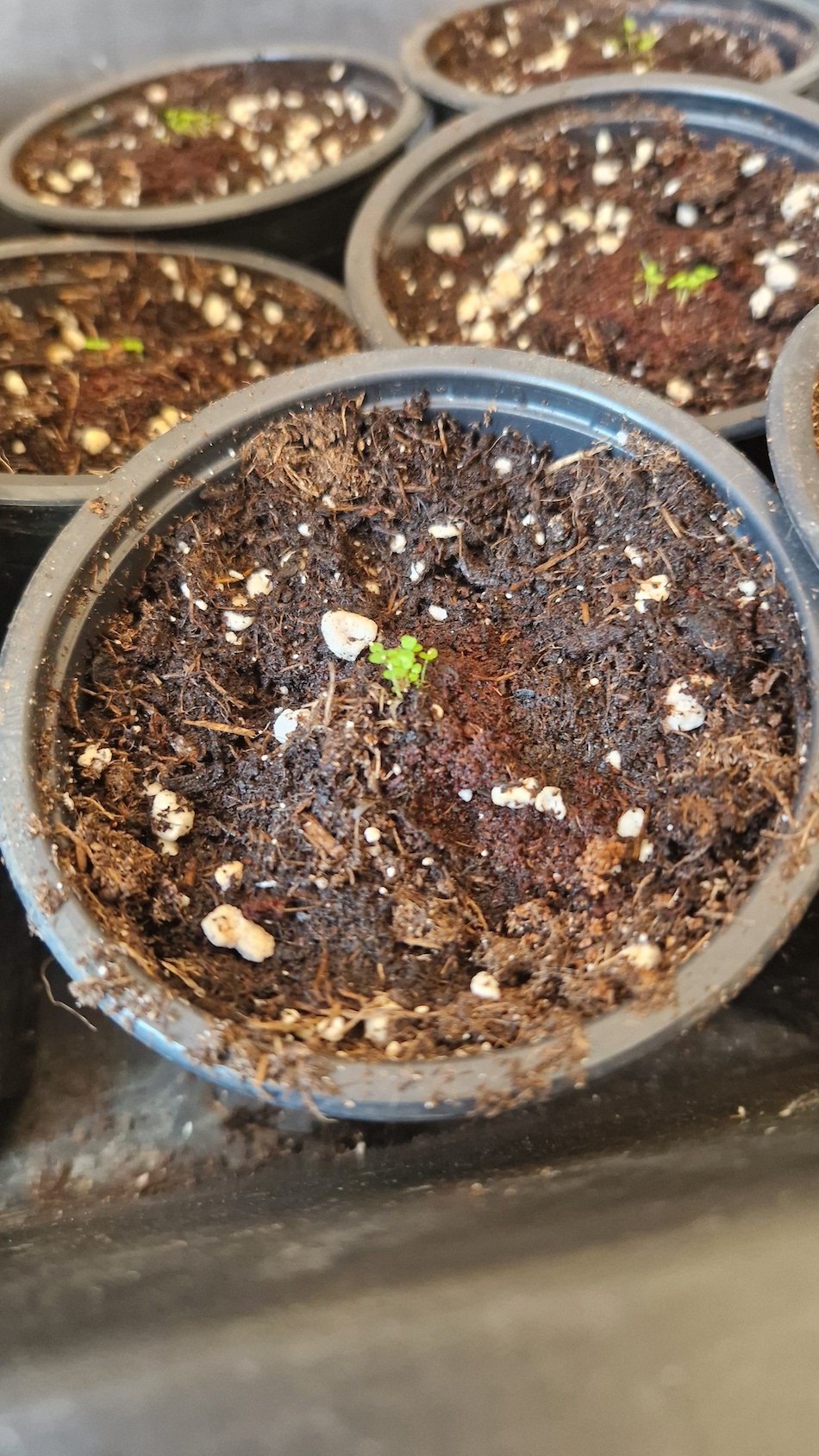
Seed propagation is possible, but it is not easy in practice because the seeds are dust-like and seedlings are delicate at first.
Seeds are very small: mixing them with fine dry sand helps even sowing
Use a very clean, fine substrate: sterile or near-sterile mixes reduce damping-off
Light germinator: sow on the surface and press gently — do not bury
Keep evenly moist (never waterlogged)
Temperature (Mediterranean best practice): Minimum ≥ 20 °C. Ideal: around 25 °C. Early spring sowings usually require a heat mat.
Germination timing: Variable; typically 2–6 weeks. Often 2–3 weeks under warm, controlled conditions.
Early growth pattern: The first 1–2 months are slow and fragile. Rapid growth starts once seedlings reach about 10 cm. When the plant reaches around 30 cm, it is ready to be planted in the soil.
Botanical garden observation: “There are no known cultivars of Muntingia calabura. The species exhibits significant genetic diversity; we have observed that some plants are more cold-tolerant or produce much more than others. Use at least two seed sources.”
Cuttings
Possible, but less reliable than seed. Useful to clone particularly vigorous or cold-tolerant individuals.
📚 Technical data on light and temperature requirements for Muntingia calabura seed germination (Brazilian Archives of Biology and Technology, 2021)
Ecological & Educational Value
In Mediterranean food forests, Muntingia calabura acts as:
A fast pioneer tree
A shade provider (“nurse tree”) for young plantings
A wildlife support species
A powerful storytelling tree for visitors
Context-dependent spread: Although Muntingia calabura can naturalise or become invasive in hot, humid tropical climates, long-term observation at the botanical garden shows no spontaneous regeneration under Mediterranean conditions. Cooler winters and dry summers strongly limit its spread.
Is Muntingia Calabura Right for You?
A good choice if you:
Live in a warm Mediterranean or subtropical climate
Have a protected, sunny site
Want fast results and strong visitor impact
Accept a shorter-lived but very generous tree
Not the best choice if: your garden regularly drops below 0 °C in winter, or if your site is exposed to strong cold winds. In those conditions, this tree is not a reliable choice.
📚 Scientific References & Further Reading
These peer-reviewed papers can help you verify key points: germination biology, pioneer ecology, reproduction, fruit chemistry/nutrition.
1. Leite, I.T.A. & Takaki, M. (2001). Phytochrome and temperature control of seed germination in Muntingia calabura. Brazilian Archives of Biology and Technology. — light involvement (surface sowing), and strong temperature effects on germination.
2. Fleming, T.H. (1985). Phenology, seed dispersal, and colonization in Muntingia calabura, a neotropical pioneer tree. American Journal of Botany. — pioneer strategy, seed dispersal, and colonisation ecology.
3. Figueiredo, R.A. et al. (2008). Reproductive ecology of the exotic tree Muntingia calabura in southeastern Brazil. Revista Árvore. — reproductive ecology and why it can naturalise in suitable climates.
4. Pereira, G.A. et al. (2018). Carbohydrates, volatile and phenolic compounds composition, and antioxidant activity of calabura (Muntingia calabura) fruit. Food Research International. — sugars and volatile/aroma compounds, plus phenolics/antioxidant context.
5. Herrera-Pool, E. et al. (2025). Comprehensive Nutritional Analysis and Bioactive Potential of Muntingia calabura Fruits. Journal of Food Science. — modern nutritional and bioactive profile.
Come down for a visit of the Orchard of Flavours, in Tavira, Algarve, and see our cotton candy trees! 🍬
This article was written by Miguel COTTON — the founder of Orchard of Flavours Botanical Garden, in Tavira, Portugal. If you have any questions or suggestions, do not hesitate to contact us: miguel@orchardofflavours.com